Satisfaction Guaranteed
All products are handled with strict quality standards to ensure consistent research-grade excellence.
Secure Ordering
Our checkout is SSL encrypted and completely secure.
Third-party Tested
Our products are verified by independent third party laboratories to meet quality standards.
Batch & Lot Tracking
All product batches and lots are assigned unique identifiers and tied to publicly posted lab reports.
Endless Commitment
We are committed to helping our customers. If you have any questions or concerns, please reach out through our Contact Us page.
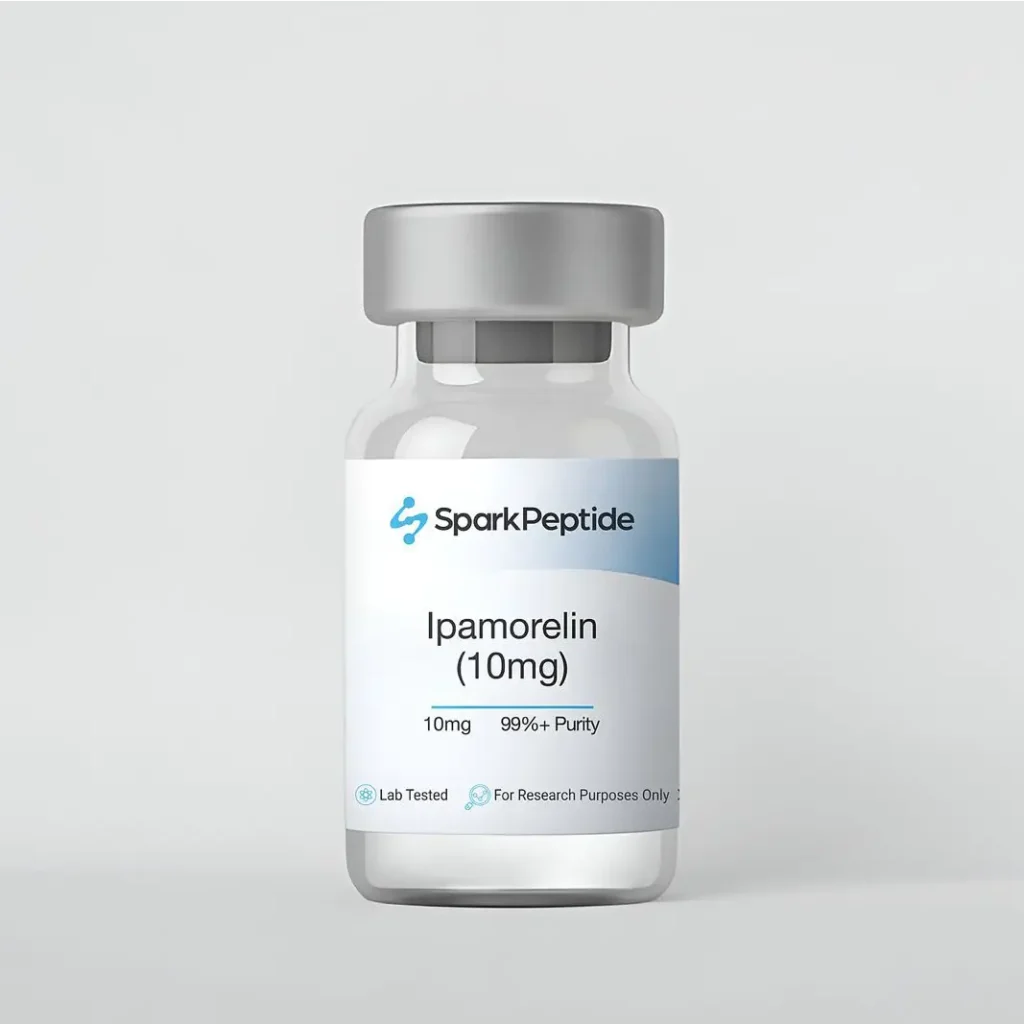
Ipamorelin (10mg)
$70.00 Original price was: $70.00.$59.99Current price is: $59.99.
Save 10.01$ (14% Off)
Discount per Quantity
| Quantity | Discount | Price |
|---|---|---|
| 5 - 10 | 5% | $56.99 |
| 11 - 20 | 10% | $53.99 |
| 21+ | 15% | $50.99 |
Rigorous Third-Party Testing
Every batch of our research chemicals and peptides undergoes third-party testing.
*Disclaimer: This product is intended solely for laboratory research purposes. It is not suitable for consumption by humans, nor for medical, veterinary, or household purposes. Kindly review our Terms & Conditions before making a purchase.

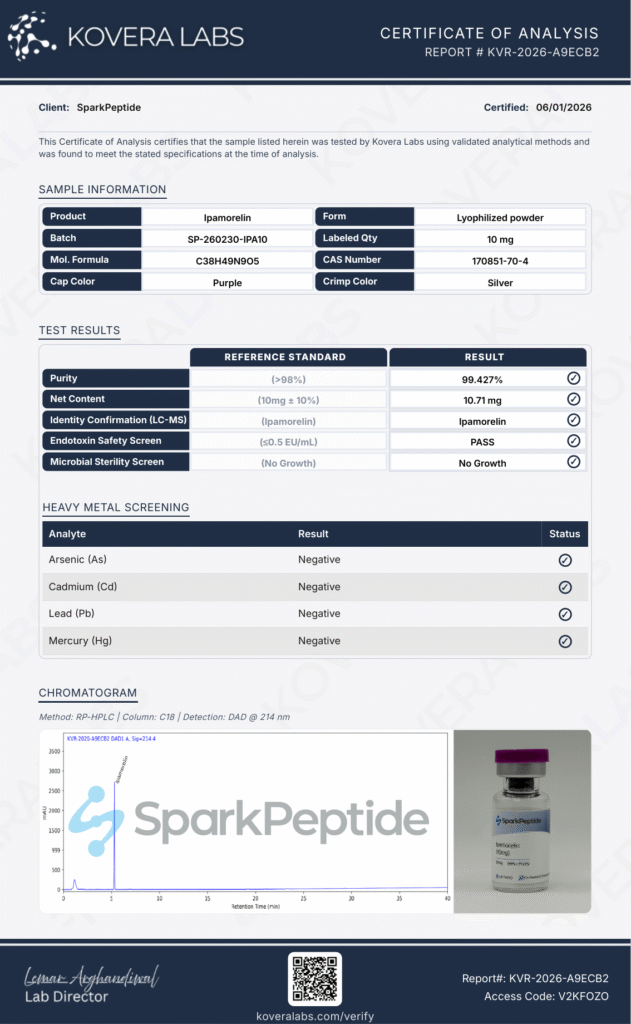
Always quality-tested, verified with third party COA’s
At every step, we prioritize quality by conducting rigorous third-party testing on all our products. These tests focus on five key characteristics- identity, purity, sterility, and endotoxin levels, and heavy metal content-ensuring that each product meets the highest standards of quality with independent third-party Certificates of Analysis (COAS) to verify our commitment to excellence.
Identity Test
Purity Test
Sterility Test
Endotoxin Test
Heavy Metals Test
Identity Test
Purity Test
Sterility Test
Endotoxin Test
Heavy Metals Test
*Disclaimer: This product is intended solely for laboratory research purposes. It is not suitable for consumption by humans, nor for medical, veterinary, or household purposes.Kindly review our Terms & Conditions before making a purchase.
What is Ipamorelin?
Ipamorelin is a synthetic pentapeptide (Aib-His-D-2-Nal-D-Phe-Lys-NH₂) classified as a selective growth hormone secretagogue and ghrelin receptor (GHSR-1a) agonist. Developed in the 1990s through structure–activity research aimed at refining earlier growth hormone–releasing peptides, it was engineered to stimulate pulsatile growth hormone release with greater receptor selectivity. Compared to first-generation GHRPs, ipamorelin demonstrates a reduced off-target activity profile at other endocrine pathways, notably cortisol, prolactin, and ACTH. Structurally, ipamorelin is a modified analogue rather than a naturally occurring fragment, designed to improve both metabolic stability and receptor specificity. In scientific literature, ipamorelin is primarily investigated for its role in regulated growth hormone signaling, metabolic modulation, and downstream effects on IGF-1 pathways. Researchers have also explored its potential influence on body composition, appetite regulation, and tissue-level anabolic signaling in preclinical models. Most published findings on ipamorelin derive from in vitro assays and animal studies, with limited human clinical evaluation compared to endogenous hormones. As such, no regulatory approval for therapeutic use has been established. Ipamorelin 5mg lyophilized formulation is supplied as a high-purity, stable powder independently verified by third-party labs, including Janoshik, with a Certificate of Analysis (COA) available for full transparency. The lyophilized format supports accurate reconstitution, reliable dosing calculations, and reproducible results, making it well suited for controlled experimental applications. Sold for research use only.How Ipamorelin Works: Mechanistic Overview
Ipamorelin functions primarily as a selective agonist of the growth hormone secretagogue receptor (GHSR-1a), the same receptor targeted by the endogenous peptide ghrelin. Its mechanism centers on receptor activation, intracellular signaling modulation, and controlled stimulation of pulsatile growth hormone (GH) release. Unlike earlier growth hormone–releasing peptides, ipamorelin was developed to favor GH output with comparatively limited activation of other pituitary hormones, a distinction that has shaped its utility as a research tool in endocrine and metabolic studies.GHSR-1a Receptor Activation and GH Signaling
Ipamorelin binds to GHSR-1a receptors expressed on pituitary somatotroph cells. Receptor activation initiates downstream intracellular signaling primarily through Gq/11 protein coupling, leading to phospholipase C (PLC) activation, which cleaves phosphatidylinositol 4,5-bisphosphate (PIP2) into diacylglycerol (DAG) and inositol trisphosphate (IP3)[1]. IP3 triggers calcium release from the endoplasmic reticulum, while DAG activates protein kinase C (PKC), collectively promoting membrane depolarization via voltage-gated calcium channels. The resulting rise in intracellular calcium drives exocytosis of GH-containing secretory granules in a pulsatile pattern consistent with physiological release dynamics. In research settings, this makes ipamorelin a useful tool for studying GH secretion kinetics, IGF-1 pathway signaling, and feedback regulation within the hypothalamic–pituitary–somatotropic axis. Animal and early human pharmacology studies consistently demonstrate dose-dependent GH elevation with a comparatively selective endocrine profile.Hypothalamic Modulation and GHRH Interaction
Beyond direct pituitary action, GHSR-1a activation at the hypothalamic level is also thought to modulate growth hormone–releasing hormone (GHRH) release from arcuate nucleus neurons[2]. GHSR-1a is expressed on GHRH-positive neurons in the arcuate nucleus, and receptor activation at this site may potentiate GHRH release into the hypophyseal portal circulation, amplifying GH output through a coordinated hypothalamic–pituitary mechanism. Additionally, ipamorelin may act to suppress somatostatin tone (the primary inhibitory regulator of GH release), though this aspect of its pharmacology is less well characterized and warrants further investigation. Taken together, these findings suggest that ipamorelin's effects involve coordination across multiple levels of the hypothalamic–pituitary axis rather than isolated pituitary stimulation alone.IGF-1 and Downstream Anabolic Signaling
GH secretion stimulated through GHSR-1a activation drives hepatic and peripheral IGF-1 production. IGF-1 signals through the IGF-1 receptor (IGF-1R), activating the PI3K/Akt pathway. This pathway promotes protein synthesis via mTORC1 and inhibits protein degradation through FOXO transcription factor suppression, as well as the MAPK/ERK pathway, which is associated with cell proliferation and differentiation[3]. Together, these cascades underpin the tissue-level anabolic responses that have made GH secretagogue research relevant to studies of muscle and bone metabolism. In preclinical models, GH and IGF-1 elevation has been linked to increased lean mass accrual, enhanced osteoblast activity, and reduced adipogenesis[6], though findings remain largely confined to animal models and direct attribution to ipamorelin specifically requires further controlled investigation.Endocrine Selectivity
A defining feature of ipamorelin is its comparatively low stimulation of ACTH, cortisol, and prolactin across many experimental models, a profile that distinguishes it from earlier GHRPs such as GHRP-2 and GHRP-6, which demonstrate broader pituitary activation at comparable doses[4]. This selectivity is thought to reflect ipamorelin's structural design, which optimized binding affinity for GHSR-1a while reducing interactions with other receptor subtypes involved in stress-axis and lactotroph signaling. In practical research terms, this profile allows investigators to examine GH-specific biological outcomes with reduced confounding from parallel hormonal changes, supporting more controlled experimental designs in endocrine research.Gastrointestinal and Metabolic Pathways
GHSR-1a is expressed beyond the pituitary and hypothalamus, including throughout the gastrointestinal tract, where ghrelin receptor signaling plays a role in gastric motility, gut contractility, and appetite regulation. Preclinical models have explored ipamorelin in this context, with research examining its influence on gastrointestinal smooth muscle activity and, in some models, its potential to attenuate postoperative ileus and support gut motility recovery[5]. These gastrointestinal applications represent an area of emerging preclinical interest that is mechanistically distinct from its endocrine effects. Separately, GH and IGF-1 pathway activation has established links to lipid metabolism, insulin sensitivity modulation, and energy substrate utilization, including shifts in fatty acid oxidation and glucose homeostasis[7], which are areas that have been explored in animal studies. However, the direct contribution of ipamorelin to these metabolic outcomes requires further controlled investigation.Research Context and Limitations
Controlled human clinical evidence for ipamorelin remains limited, and most mechanistic conclusions are derived from in vitro assays and preclinical animal models. The selectivity and signaling profiles described above have been characterized primarily in rodent and cell-based systems, and translation to human physiology should not be assumed without supporting clinical data. As such, these findings should be interpreted within that research context and are not representative of established clinical outcomes. This compound is intended for research use only.Ipamorelin 5mg Research Value (Applications)
Preclinical research on Ipamorelin primarily centers on endocrine signaling, metabolic regulation, gastrointestinal motility, and tissue remodeling models. Note that these observations are derived largely from in vitro systems, animal studies, and limited early-phase human pharmacology research. They do not imply established human or veterinary outcomes, and the compound is not approved for therapeutic use. Spark Peptide supplies Ipamorelin strictly for laboratory research purposes and does not promote clinical applications.Growth Hormone Pulsatility and IGF-1 Signaling Models
Ipamorelin is widely used in research exploring controlled growth hormone (GH) release and downstream insulin-like growth factor-1 (IGF-1) signaling[4]. In rodent and pharmacodynamic studies, selective activation of the ghrelin receptor increases pulsatile GH secretion without proportionally elevating other pituitary hormones. Researchers use this model to investigate how GH timing, amplitude, and feedback regulation influence protein synthesis markers, nitrogen balance, and tissue growth indices. In short, scientists use Ipamorelin to study how growth hormone pulses affect biological systems, rather than to directly induce tissue change.Body Composition and Metabolic Regulation Studies
Animal models have examined Ipamorelin’s influence on body composition variables, including lean mass proxies and fat mass distribution[1]. Because GH plays a regulatory role in lipid metabolism and energy partitioning, controlled GH elevation in research settings allows investigators to observe changes in metabolic markers such as glucose utilization and lipid mobilization. These outcomes are typically measured in controlled feeding or recovery models. In other words, Ipamorelin is used in research to explore how shifts in growth hormone signaling may alter energy handling in experimental systems.Gastrointestinal Motility and Ghrelin-Receptor Pathways
Beyond endocrine models, Ipamorelin has been studied as a ghrelin receptor agonist in gastrointestinal motility research. In rodent models of postoperative ileus and delayed gastric emptying, ghrelin pathway activation has been associated with increased smooth muscle contractility and enhanced transit time[5]. These findings relate to receptor signaling in enteric and vagal pathways rather than systemic GH effects. In straightforward terms, researchers use Ipamorelin to understand how ghrelin-related signaling influences gut movement in controlled laboratory models.Tissue Recovery and Remodeling Markers
Because GH and IGF-1 pathways influence cellular proliferation and protein turnover, Ipamorelin has been incorporated into animal studies examining markers of tissue remodeling and recovery after stress or injury[8]. Observed effects typically include shifts in anabolic signaling markers and changes in measurable regeneration indices within muscle or connective tissue models. Simply stated, scientists investigate whether controlled GH signaling affects how tissues respond to stress in experimental conditions. Despite these promising observations, controlled human evidence remains limited, and these findings should be interpreted strictly within a preclinical research framework.Ipamorelin Peptide Characteristics
| Property | Description |
| Name | Ipamorelin (synthetic pentapeptide growth hormone secretagogue; GHSR-1a agonist) |
| Sequence | Aib-His-D-2-Nal-D-Phe-Lys-NH₂ |
| Molecular Formula | C₃₈H₄₉N₉O₅ |
| Molecular Weight | ~711.9 g/mol (free base; minor variation may occur depending on salt form) |
| PubChem CID | 9831659 |
| Product Form | Lyophilized powder in sterile research vials (e.g., 5mg per vial) |
| Purity | Typically ≥99%, verified by independent third-party analysis; lot-specific COA available |
| Solubility | Soluble in bacteriostatic water or sterile water for research reconstitution; forms a clear solution when properly handled |
| Stability | Stable as a lyophilized powder when stored at low temperatures; reconstituted solutions should be refrigerated and used within established laboratory timeframes |
Handling & Storage Guidelines
Proper handling and storage are essential to maintain the stability, purity, and reproducibility of Ipamorelin 5mg in laboratory settings. As a lyophilized synthetic peptide, it should be protected from temperature fluctuations, light exposure, and moisture until ready for controlled reconstitution.- Storage (Unreconstituted): Store lyophilized vials refrigerated at 36–46°F (2–8°C). For extended storage, freezing at or below 14°F (-10°C) is recommended. Keep vials tightly sealed and protected from direct light and humidity.
- Reconstitution: Reconstitute using sterile water or bacteriostatic water under aseptic laboratory conditions. For the best stability, purity, and consistent results, get bacteriostatic water with your Ipamorelin order. Introduce diluent slowly along the vial wall and gently swirl; avoid vigorous shaking to reduce peptide stress.
- Aliquoting & Freeze–Thaw: If repeated use is anticipated, aliquot into sterile microtubes to minimize freeze–thaw cycles, which may compromise peptide integrity.
- Working Solution Storage: After reconstitution, store refrigerated at 36–46°F (2–8°C) and use within standard laboratory timeframes. Avoid prolonged room temperature exposure.
- Laboratory Compliance: Handle using appropriate PPE and follow institutional research, documentation, and disposal protocols. Ipamorelin is supplied strictly for research use only.
COA / Quality Assurance
Quality verification is central to reproducible peptide research. Every lot of Ipamorelin 5mg from Spark Peptide is accompanied by a lot-specific Certificate of Analysis (COA) to ensure transparency, traceability, and analytical confirmation prior to release. We work with independent third-party laboratories, including Finnrick Analytics and Janoshik, to provide objective validation of identity, purity, and quality standards. Each COA typically includes:- Peptide Identity Confirmation: Verification via analytical methods such as High-Performance Liquid Chromatography (HPLC) and/or mass spectrometry to confirm molecular composition and sequence alignment.
- Purity Assessment: Quantitative purity analysis (commonly ≥99%) to ensure minimal impurities or byproducts.
- Sterility Testing (if applicable): Evaluation for microbial contamination where relevant to the product format.
- Endotoxin Levels: Testing to confirm acceptable endotoxin thresholds for laboratory handling.
- Storage & Stability Guidance: Recommended temperature and handling parameters to maintain integrity.
Legal / Regulatory Disclaimer
Ipamorelin 5mg is supplied strictly for laboratory research use only. It is not approved for human or veterinary use, clinical administration, therapeutic application, or diagnostic procedures of any kind. The safety, efficacy, and pharmacological effects of this compound in humans or animals have not been established. Purchasers and end users are solely responsible for ensuring compliance with all applicable local, state, and federal laws, as well as institutional biosafety policies and research-use regulations. Any misrepresentation of the intended use of this product may result in regulatory action or legal consequences.Scientific References
- Sinha DK, Balasubramanian A, Tatem AJ, Rivera-Mirabal J, Yu J, Kovac J, Pastuszak AW, Lipshultz LI. Beyond the androgen receptor: The role of growth hormone secretagogues in the modern management of body composition in hypogonadal males. Translational Andrology and Urology. 2020 Mar;9(Suppl 2):S149–S159. https://pmc.ncbi.nlm.nih.gov/articles/PMC7108996/
- López Soto EJ, Agosti F, Cabral A, Mustafa ER, Damonte VM, Gandini MA, Rodríguez S, Castrogiovanni D, Felix R, Perelló M, Raingo J. Constitutive and ghrelin-dependent GHSR1a activation impairs CaV2.1 and CaV2.2 currents in hypothalamic neurons. Journal of General Physiology. 2015 Sep;146(3):205–219. https://pmc.ncbi.nlm.nih.gov/articles/PMC4555474/
- Werner H. The IGF1 Signaling Pathway: From Basic Concepts to Therapeutic Opportunities. International Journal of Molecular Sciences. 2023 Oct 4;24(19):14882. https://pmc.ncbi.nlm.nih.gov/articles/PMC10573540/
- Raun K, Hansen BS, Johansen NL, Thøgersen H, Madsen K, Ankersen M, Andersen PH. Ipamorelin, the first selective growth hormone secretagogue. European Journal of Endocrinology. 1998;139(5):552–561. https://scispace.com/pdf/ipamorelin-the-first-selective-growth-hormone-secretagogue-1t1xkfpaeo.pdf
- Greenwood-Van Meerveld B, Tyler K, Mohammadi E, Pietra C. Efficacy of ipamorelin, a ghrelin mimetic, on gastric dysmotility in a rodent model of postoperative ileus. Journal of Experimental Pharmacology. 2012 Oct 19;4:149–155. https://pmc.ncbi.nlm.nih.gov/articles/PMC4863553/
- Locatelli V, Bianchi VE. Effect of GH/IGF-1 on Bone Metabolism and Osteoporosis. International Journal of Endocrinology. 2014;2014:235060. https://pmc.ncbi.nlm.nih.gov/articles/PMC4132406/
- Clemmons DR. The relative roles of growth hormone and IGF-1 in controlling insulin sensitivity. Journal of Clinical Investigation. 2004 Jan;113(1):25–27. https://pmc.ncbi.nlm.nih.gov/articles/PMC300772/
- Johansen PB, Nowak J, Skjaerbaek C, Flyvbjerg A, Andreassen TT, Wilken M, Orskov H. Ipamorelin, a new growth-hormone-releasing peptide, induces longitudinal bone growth in rats. Growth Hormone & IGF Research. 1999 Apr;9(2):106–113. https://pubmed.ncbi.nlm.nih.gov/10373343/
About the Author: Dr. Sony Sherpa, MBBS, MD is a board-certified clinician with a background in emergency medicine and clinical practice. She specializes in medical research analysis, ensuring that product information is grounded in evidence-based medicine and strictly adheres to the latest scientific standards in peptide research and recovery.
| Property | Detail |
|---|---|
| Name | Tesamorelin |
| Classification | Synthetic analogue of human growth hormone-releasing hormone (GHRH); N-terminus modified with trans-3-hexenoic acid group for enhanced stability |
| Sequence | Ac-Tyr-D-Ala-Asp-Ala-Ile-Phe-Thr-Asn-Ser-Tyr-Arg-Lys-Val-Leu-Gly-Gln-Leu-Ser-Ala-Arg-Lys-Leu-Leu-Gln-Asp-Ile-Leu-Ser-Arg-NH₂ |
| Molecular Weight | ~3,859 Da (minor variation may occur depending on synthesis and salt form) |
| Peptide Length | 44 amino acids |
| Receptor Target | GHRH receptor — somatotroph cells of the anterior pituitary |
| Primary Research Pathways | GHRH receptor activation; GH–IGF-1 axis stimulation; lipid metabolism and visceral adipose tissue regulation; hypothalamic–pituitary feedback preservation |
| Stability Feature | N-terminal hexenoyl moiety confers resistance to DPP-IV enzymatic degradation; significantly extended half-life vs. unmodified GHRH |
| Format | Lyophilized powder supplied in sterile glass research vials |
| Purity | ≥99%, verified by lot-specific Certificate of Analysis (COA) |
| Solubility | Soluble in sterile water or appropriate aqueous laboratory-grade buffers |
| Storage (Lyophilized) | –20°C to –10°C (–4°F to 14°F), protected from light and moisture; avoid prolonged exposure to ambient humidity |
| Storage (Reconstituted) | 2–8°C (36–46°F) for short-term use (several days); aliquot into sterile containers and store at –70°C to –80°C (–94°F to –112°F) for long-term storage |
| Handling Notes | Add solvent gently along vial wall; avoid vigorous shaking or agitation; minimize freeze–thaw cycles; handle under aseptic laboratory conditions using appropriate PPE |
| Batch | EP-250522-TE10 |
| Research Designation | For research use only — not approved for human or veterinary use, clinical administration, or therapeutic application |
| Supplier | Spark Peptide |
Related products
-
Peptides
GHK-Cu
$54.99 – $79.99Price range: $54.99 through $79.99 Purchase & earn 80 points!Select options -
Peptides
NAD+ (500mg)
$75.00Original price was: $75.00.$69.99Current price is: $69.99. Purchase & earn 70 points!Add to cart -
Peptides
MOTS-C (10mg)
$65.00Original price was: $65.00.$59.99Current price is: $59.99. Purchase & earn 60 points!Add to cart -
Peptides
GLP-1 (S) (10mg)
$105.00Original price was: $105.00.$69.99Current price is: $69.99. Purchase & earn 70 points!Add to cart