Satisfaction Guaranteed
All products are handled with strict quality standards to ensure consistent research-grade excellence.
Secure Ordering
Our checkout is SSL encrypted and completely secure.
Third-party Tested
Our products are verified by independent third party laboratories to meet quality standards.
Batch & Lot Tracking
All product batches and lots are assigned unique identifiers and tied to publicly posted lab reports.
Endless Commitment
We are committed to helping our customers. If you have any questions or concerns, please reach out through our Contact Us page.
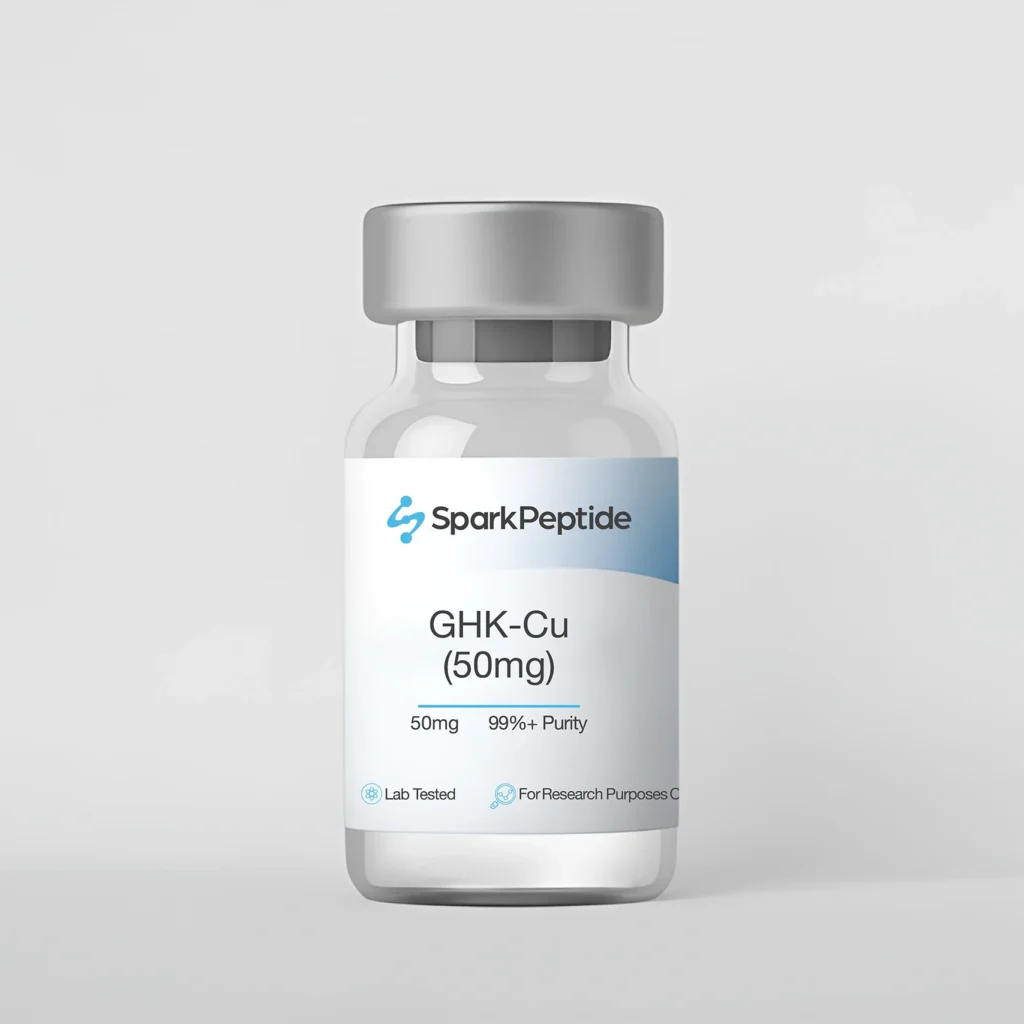
GHK-Cu (50mg)
$54.99 – $79.99Price range: $54.99 through $79.99
Save 5.01$ (8% Off)
Discount per Quantity
| Quantity | Discount | Price |
|---|---|---|
| 5 - 10 | 5% | $52.24 |
| 11 - 20 | 10% | $49.49 |
| 21+ | 15% | $46.74 |
Rigorous Third-Party Testing
Every batch of our research chemicals and peptides undergoes third-party testing.
*Disclaimer: This product is intended solely for laboratory research purposes. It is not suitable for consumption by humans, nor for medical, veterinary, or household purposes. Kindly review our Terms & Conditions before making a purchase.

Always quality-tested, verified with third party COA’s
At every step, we prioritize quality by conducting rigorous third-party testing on all our products. These tests focus on five key characteristics- identity, purity, sterility, and endotoxin levels, and heavy metal content-ensuring that each product meets the highest standards of quality with independent third-party Certificates of Analysis (COAS) to verify our commitment to excellence.
Identity Test
Purity Test
Sterility Test
Endotoxin Test
Heavy Metals Test
Identity Test
Purity Test
Sterility Test
Endotoxin Test
Heavy Metals Test
*Disclaimer: This product is intended solely for laboratory research purposes. It is not suitable for consumption by humans, nor for medical, veterinary, or household purposes.Kindly review our Terms & Conditions before making a purchase.
GHK-Cu Overview
GHK-Cu is a naturally occurring copper-binding tripeptide complex studied for its role in cellular signaling, extracellular matrix regulation, and gene expression modulation. Researchers can buy GHK-Cu for its ability to influence collagen-related pathways and tissue remodeling mechanisms in controlled laboratory systems. Unlike receptor-specific peptides, GHK-Cu functions as a multi-pathway modulator, interacting with copper-dependent biochemical processes that influence cellular communication and structural protein dynamics. Within experimental settings, GHK-Cu is commonly applied in studies examining fibroblast activity, matrix protein synthesis, and transcriptional responses linked to regenerative signaling. Spark Peptide supports consistent research outcomes through HPLC-verified purity, mass spectrometry confirmation, and batch-specific Certificates of Analysis (COA), ensuring the peptide is suitable for in-vitro assays, biochemical pathway analysis, and broader investigations into peptide-mediated cellular regulation.GHK-Cu: Molecular Origin
GHK-Cu is a naturally derived copper-binding tripeptide complex composed of glycyl-L-histidyl-L-lysine (GHK) coordinated with a divalent copper ion (Cu²⁺). The peptide itself originates from endogenous protein breakdown, particularly from larger plasma proteins such as albumin, and functions as part of the body’s peptide-based signaling network. It is present in human plasma, saliva, and urine, where it participates in copper transport and cellular communication processes within connective tissue and regenerative systems. The peptide was first isolated in 1973 by Loren Pickart during studies investigating age-related changes in human plasma and their effects on tissue repair [1]. Early research identified GHK as a growth-modulating factor capable of influencing cellular activity, particularly in relation to extracellular matrix dynamics and protein synthesis. Structurally, GHK is a simple tripeptide with a defined amino acid sequence that exhibits high affinity for copper ions, forming a stable coordination complex that enhances its biological activity [2]. This copper-binding capability is central to its function, enabling interaction with multiple biochemical pathways rather than a single receptor target. Synthetic GHK-Cu supplied by Research Peptides is produced via solid-phase peptide synthesis (SPPS), allowing precise replication of the native sequence and controlled formation of the copper-peptide complex. This structural simplicity combined with multi-pathway activity makes GHK-Cu a valuable model for studying metal ion–mediated signaling, gene expression regulation, and extracellular matrix biology.Purity & Quality Standards
GHK-Cu supplied by Spark Peptide is produced to high purity levels exceeding 99.9%, verified through high-performance liquid chromatography (HPLC) to ensure consistent composition across batches. This level of analytical precision is achieved through controlled peptide synthesis and manufacturing processes that follow cGMP-certified standards aligned with ISO 9001:2015 quality systems, supporting reproducibility in laboratory environments. Each batch undergoes Spark Peptide’s 6X Safety Testing protocol, which includes HPLC purity verification and mass spectrometry confirmation of molecular identity, alongside screening for heavy metals, endotoxins, and microbial contamination. Solubility and stability assessments are also performed to confirm handling characteristics. Batch-specific Certificates of Analysis (COA) are provided to document these results, with products shipped in protective packaging designed to maintain stability of the lyophilized peptide during transit. See our Tests & Safety page for Certificates of Analysis from the latest batch tests.GHK-Cu Mechanism of Action
GHK-Cu is studied as a copper-dependent signaling peptide that modulates cellular activity through metal ion transport, gene expression regulation, and extracellular matrix (ECM) interactions. Unlike receptor-specific peptides, its activity arises from the coordinated delivery of copper ions to target proteins and transcriptional systems, making it a useful model for investigating multi-pathway biochemical signaling and tissue remodeling processes.Receptor Binding & Primary Signaling
GHK-Cu does not act through a single defined receptor target; instead, it functions as a copper ion carrier that facilitates cellular uptake and distribution of Cu²⁺, an essential cofactor in numerous enzymatic and signaling processes [3]. The tripeptide sequence (glycyl-L-histidyl-L-lysine) forms a high-affinity coordination complex with copper, stabilizing the metal ion and enabling its interaction with cellular components involved in redox balance and protein regulation. Studies have shown that GHK-Cu can influence cell surface interactions and internalization pathways, likely through peptide transport mechanisms and copper-binding proteins rather than classical receptor-ligand binding models [4]. Once internalized, the complex contributes to early signaling events by supplying bioavailable copper to enzymes such as superoxide dismutase (SOD) and other metalloproteins, supporting redox regulation and intracellular signaling stability. Experimental findings indicate that GHK-Cu may also influence second messenger systems indirectly, including modulation of calcium signaling and oxidative stress–responsive pathways, which are closely tied to cellular communication and stress response mechanisms [2].Downstream Biological Cascades
Following intracellular uptake, GHK-Cu has been shown to modulate gene expression across multiple signaling pathways, with published findings indicating regulation of genes associated with extracellular matrix production, inflammation, and tissue remodeling [5]. In vitro studies have demonstrated increased expression of collagen, elastin, and glycosaminoglycan-related proteins in fibroblast cultures, alongside reduced expression of genes linked to inflammatory signaling and matrix degradation. These transcriptional effects are supported by activation of downstream pathways such as MAPK/ERK and TGF-β–associated signaling, which play key roles in ECM organization and cellular proliferation. Additionally, copper-dependent enzyme activation contributes to antioxidant defense mechanisms and metabolic regulation within the cellular environment. At a systems level, experimental models suggest that GHK-Cu influences coordinated biological processes involving tissue repair signaling, matrix turnover, and cellular communication networks. Its ability to modulate multiple pathways simultaneously makes it particularly useful in research focused on gene regulation, metal ion biology, and the integration of biochemical signaling systems in complex cellular environments.Key Scientific Features & Chemical Profile of GHK-Cu
The following molecular data outlines the key chemical identifiers and physical characteristics of GHK-Cu, supporting accurate compound verification, handling, and reproducibility in laboratory research settings.Molecular Data
| Property | Value |
| Molecular Formula | C28H48CuN12O8 |
| Molecular Weight | 744.3 g/mol (varies slightly with copper coordination state) |
| Amino Acid Sequence | Gly-His-Lys (GHK) complexed with Cu²⁺ |
| Structural Class | Naturally occurring tripeptide–metal complex |
| CAS Number | 49557-75-7 |
| PubChem CID | 133697840 |
| Synonyms | GHK-Cu; Copper Tripeptide-1; glycyl-L-histidyl-L-lysine copper complex |
| Physical Form | Blue lyophilized powder |
| Solubility | Soluble in water and aqueous buffers; gentle mixing recommended |
| Storage | -4°F to -112°F (-20°C to -80°C), desiccated, protected from light; after reconstitution: 36–46°F (2–8°C) |
| Stability | Stable in lyophilized form under cold, dry, light-protected conditions |
Analytical Verification
Each batch of GHK-Cu is accompanied by a Certificate of Analysis (COA) generated through independent third-party laboratory testing, providing a complete analytical profile for identity, purity, and safety. Purity is determined using high-performance liquid chromatography (HPLC), where the peptide–copper complex is separated into individual components and quantified to confirm ≥99.9% purity. Similarly, molecular identity is verified via mass spectrometry (MS), where the observed mass-to-charge ratio is matched against the theoretical molecular mass, confirming both peptide structure and correct copper coordination. Beyond primary verification, Spark Peptide applies a proprietary 6X Safety Testing protocol to ensure batch consistency and suitability for laboratory use:- HPLC purity analysis: quantifies the primary peptide peak and detects trace impurities
- Mass spectrometry (MS): confirms molecular identity and structural integrity
- Heavy metals screening: detects trace elements such as lead, mercury, arsenic, and cadmium that may interfere with biochemical assays
- Endotoxin testing: identifies pyrogenic contaminants that could affect cellular response in vitro
- Bacterial contamination analysis: verifies microbial absence to maintain experimental integrity
- Solubility and stability assessment: confirms predictable dissolution behavior and structural stability under standard laboratory conditions
GHK-Cu Storage, Handling, and Reconstitution
Maintaining the stability of GHK-Cu requires controlled storage conditions and careful handling, particularly due to its copper coordination, which can be sensitive to environmental factors such as light, temperature, and moisture. Proper preparation and storage help preserve structural integrity and ensure consistent behavior in laboratory assays involving metal ion–dependent signaling and biochemical systems.Recommended Storage Conditions
Lyophilized GHK-Cu should be stored at -4°F to -112°F (-20°C to -80°C) in a sealed, desiccated vial, protected from light and moisture to prevent degradation of the peptide–copper complex. Under these conditions, the compound remains stable for extended periods. After reconstitution, solutions should be stored at 36–46°F (2–8°C) and used within a defined laboratory timeframe to minimize oxidation and maintain consistency.Reconstitution Protocol
Reconstitution should be performed under sterile laboratory conditions using appropriate aqueous solvents:- Allow the vial to reach room temperature before opening to prevent condensation.
- Add bacteriostatic water (e.g., Spark Peptide’s Bacteriostatic Water 10ml) slowly along the inner wall of the vial.
- Use a suitable solvent volume depending on the desired concentration (commonly 1–3 mL in laboratory preparation).
- Avoid shaking or vortexing; gently swirl the vial to dissolve the peptide.
- Ensure the solution appears clear to slightly blue, with no visible particulates.
- Store the reconstituted solution at 36–46°F (2–8°C) and avoid prolonged storage.
Handling Precautions
GHK-Cu should be handled in a clean, controlled laboratory environment using standard sterile techniques to minimize contamination. Due to its copper-bound structure, exposure to light, air, and repeated freeze–thaw cycles should be limited, as these factors may influence stability and oxidation state. Appropriate personal protective equipment, including gloves and lab coats, should be used at all times. All handling should follow established laboratory protocols, and the compound is intended strictly for research use only.GHK-Cu Research & Scientific Applications
GHK-Cu is widely used in experimental systems investigating extracellular matrix dynamics, metal ion–mediated signaling, and gene expression modulation. Preclinical data suggests that its copper-binding properties enable broad interaction with cellular pathways, making it a useful model for studying tissue remodeling, fibroblast activity, and biochemical regulation in controlled in-vitro and in vivo environments.Preclinical & Diagnostic Research
In-vitro studies have demonstrated that GHK-Cu influences multiple cellular processes through its role as a copper delivery peptide. In fibroblast culture systems, published findings indicate increased expression of collagen, elastin, and glycosaminoglycan-related components, alongside modulation of matrix metalloproteinases involved in extracellular matrix turnover [6]. These effects are often assessed through biochemical endpoints such as gene expression profiling, protein synthesis rates, and enzyme activity measurements associated with tissue remodeling pathways. Additional research has examined GHK-Cu’s role in transcriptional regulation, with studies reporting changes in the expression of genes linked to inflammation, oxidative stress, and cellular repair processes [7]. Experimental models suggest that these effects are mediated through copper-dependent signaling mechanisms and activation of pathways such as MAPK/ERK and TGF-β–associated signaling cascades. In diagnostic and mechanistic research, GHK-Cu has been used to explore biomarker responses related to extracellular matrix integrity and cellular signaling balance. Its ability to modulate multiple pathways simultaneously makes it particularly useful in studies examining coordinated cellular responses, rather than single receptor-driven effects.Animal Model Observations
Animal studies have reported that GHK-Cu influences measurable biological parameters associated with tissue structure and cellular signaling. In rodent models, experimental findings suggest increased collagen deposition and alterations in extracellular matrix composition, accompanied by changes in gene expression patterns linked to regenerative signaling pathways [8]. These observations are typically quantified through histological analysis, protein expression assays, and molecular profiling techniques. Additional studies have examined systemic biochemical responses, including modulation of oxidative stress markers and activity of copper-dependent enzymes such as superoxide dismutase (SOD). Experimental models have also demonstrated changes in signaling pathways associated with cellular proliferation and matrix organization, including MAPK/ERK and related intracellular cascades [7]. At a systems level, these findings highlight the role of GHK-Cu in coordinating multiple biological processes, including matrix turnover, redox balance, and gene regulation. As a result, it is frequently applied in research investigating metal ion biology, extracellular matrix dynamics, and the integration of signaling pathways in complex biological systems.GHK-Cu Comparative Analysis
Understanding how GHK-Cu compares to other commonly studied peptides provides useful context for experimental design and pathway selection. While many peptides are evaluated for specific signaling or structural roles, GHK-Cu occupies a distinct position as a copper-dependent modulator, influencing multiple biochemical systems simultaneously. The comparison below highlights key differences in mechanism, signaling behavior, and research applications relative to widely used analogs.GHK-Cu Comparison to Standard Analogs
GHK-Cu differs from many commonly studied peptides in that it does not act through a single receptor system but instead functions as a copper-dependent signaling modulator. Compared to peptides such as BPC-157 and TB-500, which are often studied for their roles in cytoskeletal dynamics and angiogenic signaling, GHK-Cu operates through a distinct mechanism centered on metal ion transport and gene expression regulation. Experimental models suggest that GHK-Cu’s ability to bind and deliver Cu²⁺ enables interaction with a broader range of biochemical pathways, particularly those involved in extracellular matrix (ECM) remodeling and transcriptional control [4]. In contrast to BPC-157, which is derived from gastric peptides and associated with nitric oxide and cytoprotective pathways, and TB-500 (a thymosin beta-4 fragment) that influences actin dynamics and cell migration, GHK-Cu demonstrates a more systems-level effect on cellular signaling. Published findings indicate that GHK-Cu can regulate genes associated with collagen synthesis, inflammation, and oxidative stress, rather than acting primarily through receptor-mediated signaling or structural protein interactions [7]. This makes it particularly useful in studies focusing on integrated biochemical regulation rather than isolated pathway activation.| Parameter | GHK-Cu | BPC-157 | TB-500 |
| Half-life | Moderate stability; copper-dependent complex | Stable peptide fragment | Moderate; rapid tissue distribution |
| Receptor Selectivity | Non-receptor mediated; metal ion interaction | Not receptor-specific; NO pathway involvement | Not receptor-specific; actin-binding related |
| Primary Mechanism | Copper transport; gene expression modulation | Cytoprotective signaling; NO pathways | Actin regulation; cell migration signaling |
| Research Applications | ECM studies; gene expression; metal ion biology | Tissue integrity models; vascular signaling | Cytoskeletal dynamics; wound-related signaling |
Peer-Reviewed Research & Citations
- Pickart, L., Vasquez-Soltero, J. M., & Margolina, A. (2015). GHK peptide as a natural modulator of multiple cellular pathways in skin regeneration. BioMed Research International, 2015, 648108. https://doi.org/10.1155/2015/648108
- Mehr, A., Henneberg, F., Chari, A., Görlich, D., & Huyton, T. (2020). The copper(II)-binding tripeptide GHK, a valuable crystallization and phasing tag for macromolecular crystallography. Acta Crystallographica Section D: Structural Biology, 76(12), 1222–1232. https://doi.org/10.1107/S2059798320013741
- Park, J. R., Lee, H., Kim, S. I., & Yang, S. R. (2016). The tri-peptide GHK-Cu complex ameliorates lipopolysaccharide-induced acute lung injury in mice. Oncotarget, 7(36), 58405–58417. https://doi.org/10.18632/oncotarget.11168
- Mao, S., Huang, J., Li, J., Sun, F., Zhang, Q., Cheng, Q., Zeng, W., Lei, D., Wang, S., & Yao, J. (2025). Exploring the beneficial effects of GHK-Cu on an experimental model of colitis and the underlying mechanisms. Frontiers in Pharmacology, 16, 1551843. https://doi.org/10.3389/fphar.2025.1551843
- Pickart, L., Vasquez-Soltero, J. M., & Margolina, A. (2017). The effect of the human peptide GHK on gene expression relevant to nervous system function and cognitive decline. Brain Sciences, 7(2), 20. https://doi.org/10.3390/brainsci7020020
- Pickart, L., & Margolina, A. (2018). Regenerative and protective actions of the GHK-Cu peptide in the light of the new gene data. International Journal of Molecular Sciences, 19(7), 1987. https://doi.org/10.3390/ijms19071987
- Pickart, L., Vasquez-Soltero, J. M., & Margolina, A. (2015). GHK-Cu may prevent oxidative stress in skin by regulating copper and modifying expression of numerous antioxidant genes. Cosmetics, 2(3), 236–247. https://doi.org/10.3390/cosmetics2030236
- He, Q., Mazzola, J., & Ladiges, W. (2024). The naturally occurring peptide GHK reverses age-related fibrosis by modulating myofibroblast function. Aging Pathobiology and Therapeutics, 6(4), 186–190. https://doi.org/10.31491/apt.2024.12.158
Certificate of Analysis & Lab Reports
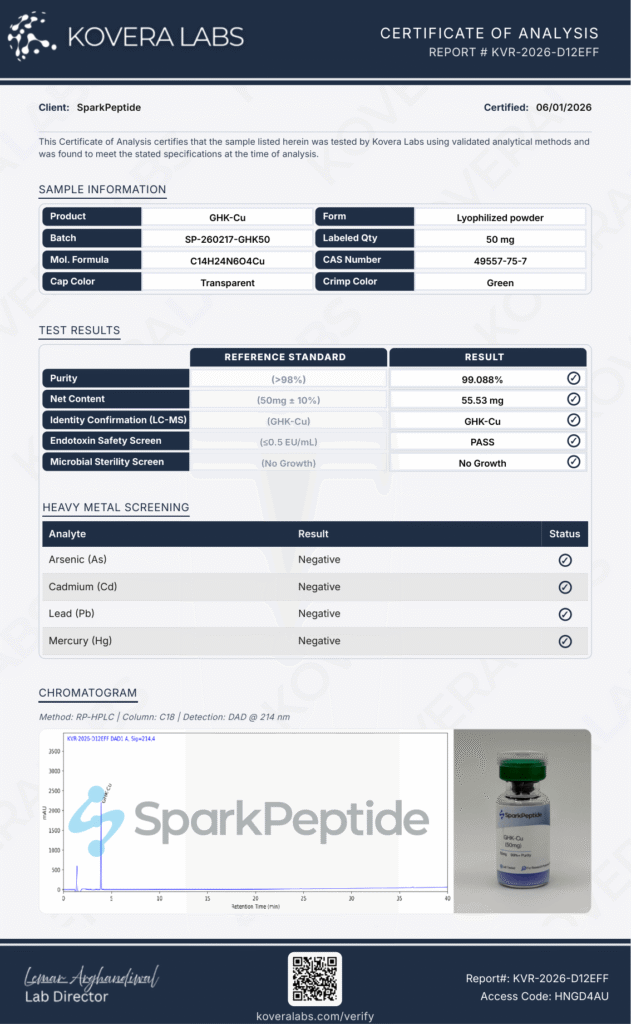
Each batch of GHK-Cu is supplied with a Certificate of Analysis (COA) generated through independent third-party laboratory testing. This documentation provides batch-specific verification of peptide identity, purity, and safety parameters, forming a core component of Spark Peptide’s 6X Safety Testing protocol and supporting traceability across laboratory applications. The COA details analytical results associated with the specific production lot, including purity confirmation through high-performance liquid chromatography (HPLC) and molecular identity verification via mass spectrometry (MS). It also includes safety screening data and key batch information such as lot number, test dates, and analytical methods used, allowing researchers to independently review and validate the material prior to experimental use.HPLC Analysis Report
High-performance liquid chromatography (HPLC) is used to assess the chemical purity of the GHK-Cu complex by separating individual components based on their interactions with the chromatographic column. This allows for precise quantification of the primary peptide peak relative to any detectable impurities. This batch: ≥99.9% purity via HPLCMass Spectrometry Report
Mass spectrometry (MS) confirms molecular identity by measuring the mass-to-charge ratio (m/z) of the peptide–copper complex. The resulting spectral data is compared against the theoretical molecular mass derived from the GHK sequence and copper coordination state, verifying structural integrity and correct complex formation.Additional Safety Screening
As part of the 6X Safety Testing protocol, each batch undergoes additional analytical screening to ensure suitability for laboratory use. This includes heavy metals testing for trace contaminants, endotoxin analysis to detect pyrogenic substances, and bacterial contamination screening. Solubility and stability assessments are also performed to confirm predictable handling characteristics under standard laboratory conditions. Complete analytical reports are available upon request or through the Spark Peptide Tests & Safety page, providing full transparency and supporting reproducibility in research environments.Why 6X Safety Testing Matters for Your Research
While most suppliers verify purity alone, every SparkPeptide batch passes six independent quality and safety screenings before reaching your laboratory.| # | Test | What It Confirms |
| 1 | HPLC Purity Analysis | Peptide purity at 99.9%+ via reverse-phase chromatography |
| 2 | Mass Spectrometry | Correct molecular identity (observed vs. expected mass) |
| 3 | Heavy Metal Screening | Below detectable limits for lead, mercury, arsenic, cadmium |
| 4 | Endotoxin Testing | Bacterial endotoxin levels within safe research thresholds (LAL assay) |
| 5 | Bacterial Contamination | No microbial growth detected in culture testing |
| 6 | Solubility & Stability | Proper reconstitution behavior and structural integrity confirmed |
Legal Disclaimer
For Laboratory Research Use Only. All products sold by Spark Peptide are strictly intended for laboratory research use only. These materials are not for human consumption and are not intended for medical, veterinary, diagnostic, or household use of any kind. Spark Peptide operates solely as a research chemical supplier. We are not a compounding pharmacy and do not operate as a compounding facility as defined under Section 503A of the Federal Food, Drug, and Cosmetic Act. Additionally, Spark Peptide is not registered as an outsourcing facility under Section 503B of the Act. By purchasing from our site, you agree to use our products exclusively for lawful laboratory research purposes. Any misuse is strictly prohibited.Product FAQ for Researchers
How is the purity of GHK-Cu verified?
GHK-Cu is produced to ≥99.9% purity, confirmed through high-performance liquid chromatography (HPLC), which separates and quantifies peptide components within each batch. Molecular identity is verified using mass spectrometry. These analyses form part of Spark Peptide’s 6X Safety Testing protocol, which also includes heavy metal screening, endotoxin testing, and microbial contamination analysis, with all results documented in batch-specific Certificates of Analysis.What is the recommended method for reconstituting GHK-Cu?
Reconstitution should be performed using bacteriostatic water under sterile laboratory conditions. The vial should first be allowed to reach room temperature before solvent is added slowly along the vial wall to minimize agitation. The solution should be mixed by gentle swirling rather than vortexing. For consistency in laboratory preparation, researchers may use Spark Peptide’s Bacteriostatic Water 10ml product.How should GHK-Cu be stored for optimal stability?
In lyophilized form, GHK-Cu should be stored at -4°F to -112°F (-20°C to -80°C), protected from light and moisture to maintain stability of the peptide–copper complex. Under these conditions, it remains stable for extended periods. After reconstitution, the solution should be refrigerated at 36–46°F (2–8°C) and handled within a defined laboratory timeframe to preserve integrity.Does GHK-Cu come with a Certificate of Analysis?
Each batch of GHK-Cu is accompanied by a Certificate of Analysis (COA) generated through independent third-party laboratory testing. The COA confirms identity through mass spectrometry, verifies purity via HPLC analysis, and includes safety screening data. Researchers can access batch-specific documentation directly from the product page for full transparency and traceability.How is GHK-Cu packaged and shipped?
GHK-Cu is supplied in lyophilized form to enhance stability during transit. Protective packaging is used to minimize exposure to temperature fluctuations, light, and moisture. Standard laboratory shipping practices are followed, and free shipping is available on qualifying orders above $200, supporting secure delivery of research materials.What makes GHK-Cu relevant for multi-pathway signaling research?
GHK-Cu functions as a copper-binding peptide that influences multiple biochemical pathways rather than a single receptor system. Its ability to deliver bioavailable copper allows it to interact with enzymes, transcriptional processes, and extracellular matrix signaling networks. This makes it particularly useful in studies examining gene expression, metal ion biology, and coordinated cellular signaling responses.| Property | Value |
| Molecular Formula | C28H48CuN12O8 |
| Molecular Weight | 744.3 g/mol (varies slightly with copper coordination state) |
| Amino Acid Sequence | Gly-His-Lys (GHK) complexed with Cu²⁺ |
| Structural Class | Naturally occurring tripeptide–metal complex |
| CAS Number | 49557-75-7 |
| PubChem CID | 133697840 |
| Synonyms | GHK-Cu; Copper Tripeptide-1; glycyl-L-histidyl-L-lysine copper complex |
| Physical Form | Blue lyophilized powder |
| Solubility | Soluble in water and aqueous buffers; gentle mixing recommended |
| Storage | -4°F to -112°F (-20°C to -80°C), desiccated, protected from light; after reconstitution: 36–46°F (2–8°C) |
| Stability | Stable in lyophilized form under cold, dry, light-protected conditions |
Related products
-
Peptides
GHK-Cu
$54.99 – $79.99Price range: $54.99 through $79.99 Purchase & earn 80 points!Select options -
Peptides
BPC-157
$39.99 – $64.99Price range: $39.99 through $64.99 Purchase & earn 65 points!Select options