
Satisfaction Guaranteed
All products are handled with strict quality standards to ensure consistent research-grade excellence.
Secure Ordering
Our checkout is SSL encrypted and completely secure.
Third-party Tested
Our products are verified by independent third party laboratories to meet quality standards.
Batch & Lot Tracking
All product batches and lots are assigned unique identifiers and tied to publicly posted lab reports.
Endless Commitment
We are committed to helping our customers. If you have any questions or concerns, please reach out through our Contact Us page.
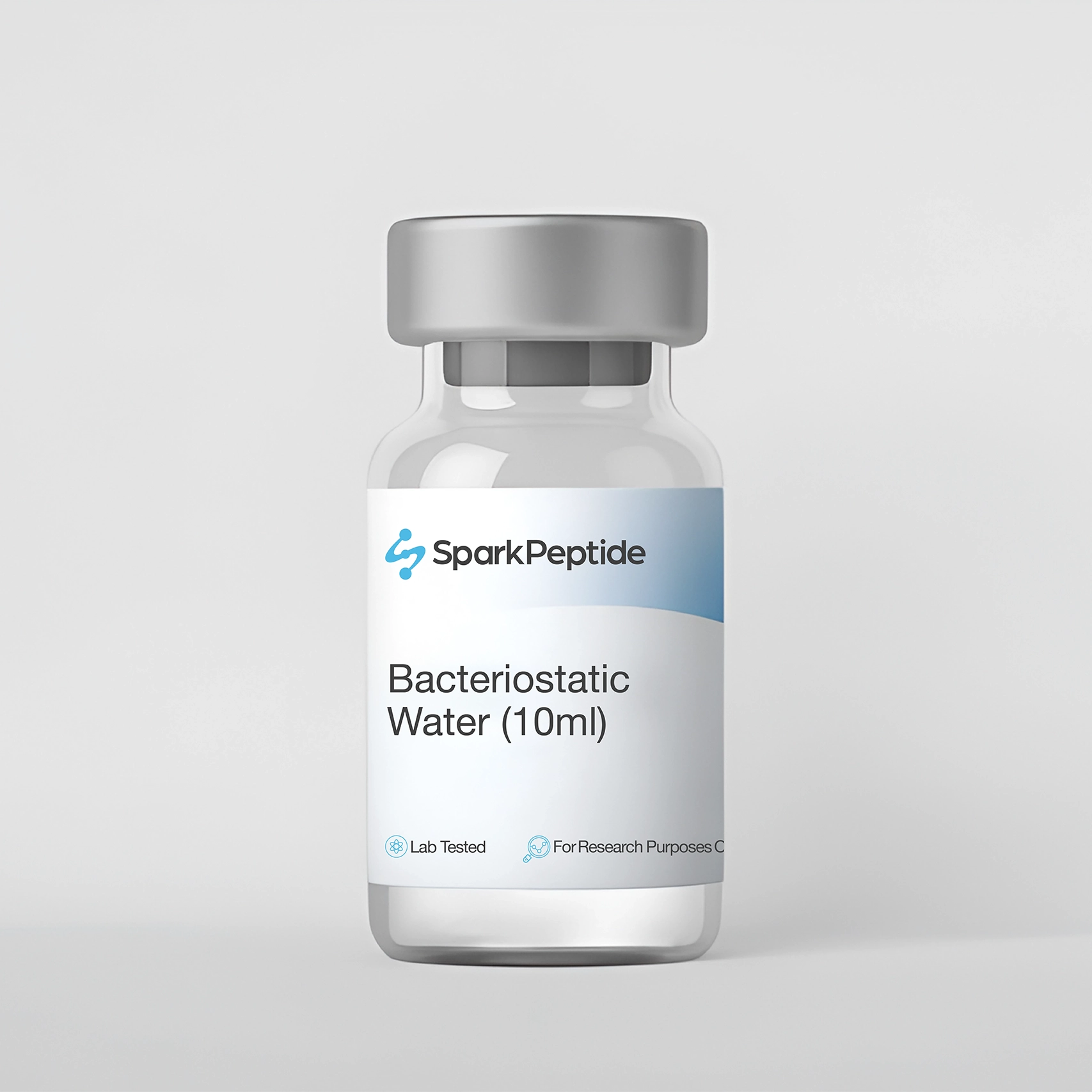
Bacteriostatic Water
$14.99
Discount per Quantity
| Quantity | Discount | Price |
|---|---|---|
| 5 - 10 | 5% | $14.24 |
| 11 - 20 | 10% | $13.49 |
| 21+ | 15% | $12.74 |
Rigorous Third-Party Testing
Every batch of our research chemicals and peptides undergoes third-party testing.
*Disclaimer: This product is intended solely for laboratory research purposes. It is not suitable for consumption by humans, nor for medical, veterinary, or household purposes. Kindly review our Terms & Conditions before making a purchase.

Always quality-tested, verified with third party COA’s
At every step, we prioritize quality by conducting rigorous third-party testing on all our products. These tests focus on five key characteristics- identity, purity, sterility, and endotoxin levels, and heavy metal content-ensuring that each product meets the highest standards of quality with independent third-party Certificates of Analysis (COAS) to verify our commitment to excellence.
Identity Test
Purity Test
Sterility Test
Endotoxin Test
Heavy Metals Test
Identity Test
Purity Test
Sterility Test
Endotoxin Test
Heavy Metals Test
*Disclaimer: This product is intended solely for laboratory research purposes. It is not suitable for consumption by humans, nor for medical, veterinary, or household purposes.Kindly review our Terms & Conditions before making a purchase.
Bacteriostatic Water (10ml) Overview
Bacteriostatic Water is a sterile, non-pyrogenic aqueous solution containing 0.9% benzyl alcohol (C7H8O), utilized primarily as a diluent for the reconstitution of lyophilized peptides and laboratory compounds. The addition of benzyl alcohol acts as a bacteriostatic agent by inhibiting microbial proliferation and ensuring the integrity of your solution after initial vial access. In research environments, bacteriostatic water is commonly used in peptide preparation workflows, dilution protocols, and solution standardization for in-vitro applications. Spark Peptide ensures consistent quality through sterile filtration and controlled manufacturing conditions, with batch-level testing and certification documentation to support reliable use in laboratory preparation and compound handling procedures.Research Peptides Sterility & Quality Standards for Bacteriostatic Water
Bacteriostatic Water supplied by Spark Peptide is prepared using sterile filtration and aseptic filling processes designed to maintain solution integrity from production through end use. Each vial is filled in controlled environments and sealed to prevent microbial ingress, ensuring that sterility is preserved prior to initial access. The use of multi-dose vial formats further requires strict quality control over container closure systems and solution clarity. Manufacturing follows cGMP-aligned processes under ISO 9001:2015 quality systems, with batch-level testing performed to verify sterility, absence of visible particulates, and overall solution consistency. The inclusion of benzyl alcohol is validated as part of formulation control to ensure antimicrobial effectiveness across typical laboratory handling conditions. Batch-specific Certificates of Analysis (COA) are provided with our Bac water products to support traceability, allowing researchers to verify quality parameters and maintain reproducibility across preparation workflows.Composition & Functional Role
Bacteriostatic Water is composed of sterile water for injection combined with 0.9% benzyl alcohol, a preservative that inhibits the growth of bacteria within the solution after initial vial access. This distinguishes it from sterile water alone, which lacks antimicrobial protection and is typically intended for single-use applications. The inclusion of benzyl alcohol allows bacteriostatic water to be used multiple times under appropriate laboratory handling conditions without compromising sterility. Functionally, bacteriostatic water serves as a reconstitution and dilution medium for lyophilized compounds, particularly peptides and other laboratory-grade materials requiring controlled preparation. It provides a neutral, aqueous environment that supports consistent solubility while minimizing the risk of microbial contamination during repeated use. This makes it a standard component in laboratory workflows involving compound preparation, solution standardization, and experimental consistency across in-vitro systems.Key Scientific Features & Specifications of Bacteriostatic Water
The following specifications outline the composition and physical characteristics of Bacteriostatic Water (10ml), supporting accurate identification, handling, and compatibility with laboratory preparation workflows.| Property | Value |
| Composition | Sterile water for injection with 0.9% benzyl alcohol |
| Benzyl Alcohol Concentration | 0.9% (preservative for antimicrobial activity) |
| Molecular Formula | H2O (primary component) + C7H8O (benzyl alcohol) |
| Molecular Weight | 18.02 g/mol (water) + 108.14 g/mol (benzyl alcohol) |
| Structural Class | Sterile aqueous solution with antimicrobial preservative |
| Physical Form | Clear, colorless solution |
| Volume | 10 mL multi-dose vial |
| Container Type | Sterile, sealed glass vial with rubber stopper |
| Sterility | Sterile, non-pyrogenic |
| Solubility | Fully miscible with aqueous solutions |
| Storage | 68–77°F (20–25°C), protected from excessive heat and light |
| Stability | Stable under recommended storage conditions; maintain sterility after initial access with proper handling |
Bacteriostatic Water: Storage, Handling, and Use
Proper storage and handling of Bacteriostatic Water are essential to maintain sterility and ensure reliable use in laboratory preparation workflows. As a multi-dose solution, attention to contamination control and environmental exposure is critical after initial vial access.Recommended Storage Conditions
Bacteriostatic Water should be stored at 68–77°F (20–25°C) in its original sealed vial, protected from excessive heat, light, and moisture. Refrigeration is not required but may be used in controlled environments if consistent conditions are maintained. The solution should remain clear and free of particulates; any change in appearance may indicate compromised integrity.Use in Laboratory Preparation
Bacteriostatic Water is commonly used for reconstituting lyophilized peptides and preparing aqueous solutions under sterile conditions:- Wipe the vial stopper with an alcohol swab before each use.
- Use a sterile syringe and needle to withdraw the required volume.
- Introduce the solution slowly into the target vial (e.g., lyophilized peptide) along the inner wall.
- Avoid excessive agitation; gently swirl to mix when necessary.
- Maintain sterile technique throughout preparation to prevent contamination.
Handling Precautions
Bacteriostatic Water should be handled using standard aseptic laboratory techniques to preserve sterility during repeated use. The vial should be accessed with sterile equipment only, and care should be taken to avoid introducing contaminants during withdrawal. Repeated needle punctures should be minimized, and the stopper should be disinfected prior to each entry. The product is intended strictly for laboratory research use and should be handled in accordance with established laboratory protocols.Bacteriostatic Water: Research Use & Application Context
Bacteriostatic Water is widely used in laboratory environments as a sterile solvent for reconstituting and diluting lyophilized compounds, particularly peptides and other research-grade materials. Its formulation supports consistent solution preparation while reducing the risk of microbial contamination during repeated use, making it a standard component in peptide handling workflows.Peptide Reconstitution Workflows
In laboratory practice, bacteriostatic water is commonly used to reconstitute lyophilized peptides into stable aqueous solutions for experimental use. The presence of benzyl alcohol allows the solution to be accessed multiple times under controlled conditions, supporting workflows that require incremental volume withdrawal. This is particularly relevant in research settings where precise concentration adjustments and repeat handling are necessary for assay preparation and solution standardization. The solution provides a neutral aqueous environment that facilitates predictable dissolution behavior across a wide range of peptide classes. It is routinely used in in-vitro systems, biochemical assays, and controlled preparation protocols where maintaining sterility and solution consistency is critical.Compatibility & Preparation Considerations
Bacteriostatic Water is compatible with most lyophilized peptides and aqueous laboratory preparations, making it suitable for general use in peptide research applications. Its use supports standardized preparation techniques, including controlled dilution and reconstitution protocols, without introducing reactive components that could interfere with peptide stability or assay conditions. In experimental setups, researchers often rely on bacteriostatic water to maintain reproducibility across batches and preparation cycles, particularly in studies requiring consistent solvent conditions. Its role as a preparation medium makes it an essential component in laboratory workflows focused on peptide handling, solution preparation, and experimental consistency.Bacteriostatic Water vs Sterile Water Comparison
Understanding the difference between bacteriostatic water and sterile water is important for selecting the appropriate solvent in laboratory workflows. While both are purified and intended for controlled use, their composition and handling characteristics differ in ways that can affect experimental preparation and storage. Bacteriostatic water contains 0.9% benzyl alcohol, which provides antimicrobial activity and allows the solution to be used multiple times under proper sterile conditions. In contrast, sterile water for injection contains no preservative and is typically designated for single-use applications, as it does not inhibit microbial growth after the vial has been opened. From a laboratory perspective, this distinction influences how each solution is applied. Bacteriostatic water is commonly used in peptide reconstitution workflows where repeated access to the vial is required, supporting consistent preparation across multiple uses. Sterile water, on the other hand, is preferred in applications where preservative-free conditions are necessary or where the solution will be used immediately after opening.| Parameter | Bacteriostatic Water | Sterile Water |
| Preservative | 0.9% benzyl alcohol | None |
| Use Type | Multi-dose (with proper handling) | Single-use |
| Antimicrobial Activity | Yes (inhibits bacterial growth) | No |
| Reusability | Suitable for repeated access | Not recommended after opening |
| Typical Applications | Peptide reconstitution; solution preparation | Immediate-use dilution; preservative-free systems |
Certificate of Analysis & Lab Reports
Each batch of Bacteriostatic Water is supplied with a Certificate of Analysis (COA) generated through independent third-party laboratory testing. This documentation provides verification of sterility, solution composition, and quality parameters, supporting traceability and consistency across laboratory preparation workflows. The COA includes confirmation of sterility through validated testing methods, ensuring the absence of microbial contamination prior to distribution. It also verifies formulation integrity, including the presence and concentration of benzyl alcohol, and assesses clarity and absence of particulate matter. Batch-specific details such as lot number, testing dates, and analytical methods are documented, allowing researchers to review and confirm quality characteristics before use.Sterility Verification
Sterility testing is performed to confirm that the solution is free from viable microorganisms. This ensures that the product is suitable for repeated use under controlled laboratory conditions, provided proper aseptic handling techniques are maintained.Composition Verification
Analytical methods are used to confirm the correct formulation of the solution, including the concentration of benzyl alcohol as the bacteriostatic agent. This ensures consistent antimicrobial performance across batches and supports reliable use in multi-dose applications.Additional Quality Checks
Further quality control measures include visual inspection for clarity, absence of particulate contamination, and verification of container integrity. These checks help ensure that the solution maintains its expected physical and chemical properties throughout storage and use. Complete analytical documentation is available upon request or through the Spark Peptide Tests & Safety page, providing transparency and supporting reproducibility in laboratory preparation processes.Why 6X Safety Testing Matters for Your Research
While most suppliers verify purity alone, every SparkPeptide batch passes six independent quality and safety screenings before reaching your laboratory.| # | Test | What It Confirms |
| 1 | HPLC Purity Analysis | Peptide purity at 99.9%+ via reverse-phase chromatography |
| 2 | Mass Spectrometry | Correct molecular identity (observed vs. expected mass) |
| 3 | Heavy Metal Screening | Below detectable limits for lead, mercury, arsenic, cadmium |
| 4 | Endotoxin Testing | Bacterial endotoxin levels within safe research thresholds (LAL assay) |
| 5 | Bacterial Contamination | No microbial growth detected in culture testing |
| 6 | Solubility & Stability | Proper reconstitution behavior and structural integrity confirmed |
Legal Disclaimer
For Laboratory Research Use Only. All products sold by Spark Peptide are strictly intended for laboratory research use only. These materials are not for human consumption and are not intended for medical, veterinary, diagnostic, or household use of any kind. Spark Peptide operates solely as a research chemical supplier. We are not a compounding pharmacy and do not operate as a compounding facility as defined under Section 503A of the Federal Food, Drug, and Cosmetic Act. Additionally, Spark Peptide is not registered as an outsourcing facility under Section 503B of the Act. By purchasing from our site, you agree to use our products exclusively for lawful laboratory research purposes. Any misuse is strictly prohibited.Product FAQ for Researchers
What is bacteriostatic water used for in laboratory settings?
Bacteriostatic water is primarily used as a sterile solvent for reconstituting and diluting lyophilized compounds, including peptides. Its formulation supports controlled preparation workflows while helping maintain sterility during repeated use. This makes it a standard component in laboratory environments where precise solution preparation and consistency are required.How is bacteriostatic water different from sterile water?
Bacteriostatic water contains 0.9% benzyl alcohol, which inhibits microbial growth and allows for multi-dose use under proper sterile conditions. Sterile water contains no preservative and is typically intended for single-use applications. This difference makes bacteriostatic water more suitable for workflows involving repeated vial access.How should bacteriostatic water be stored after opening?
After opening, bacteriostatic water should be stored at 68–77°F (20–25°C) and handled using sterile techniques to maintain integrity. The vial stopper should be disinfected before each use, and sterile equipment should be used for withdrawal. Proper handling helps preserve sterility and ensures consistent performance across multiple uses.Is bacteriostatic water sterile?
Yes. Bacteriostatic water is sterile and non-pyrogenic, prepared using sterile filtration and aseptic filling processes. Each batch undergoes sterility testing to confirm the absence of microbial contamination prior to distribution. Maintaining sterility during use depends on proper laboratory handling practices.How long can bacteriostatic water be used after first access?
Bacteriostatic water is designed for multi-dose use due to the presence of benzyl alcohol, which inhibits bacterial growth. However, continued usability depends on maintaining sterile handling conditions. Researchers typically follow laboratory protocols to determine appropriate use periods based on contamination control practices.Can bacteriostatic water be used with all peptides?
Bacteriostatic water is compatible with most lyophilized peptides and aqueous laboratory preparations. It provides a neutral solvent environment that supports consistent dissolution and preparation. However, researchers should always verify compatibility with specific compounds and experimental conditions before use.| Property | Value |
| Composition | Sterile water for injection with 0.9% benzyl alcohol |
| Benzyl Alcohol Concentration | 0.9% (preservative for antimicrobial activity) |
| Molecular Formula | H2O (primary component) + C7H8O (benzyl alcohol) |
| Molecular Weight | 18.02 g/mol (water) + 108.14 g/mol (benzyl alcohol) |
| Structural Class | Sterile aqueous solution with antimicrobial preservative |
| Physical Form | Clear, colorless solution |
| Volume | 10 mL multi-dose vial |
| Container Type | Sterile, sealed glass vial with rubber stopper |
| Sterility | Sterile, non-pyrogenic |
| Solubility | Fully miscible with aqueous solutions |
| Storage | 68–77°F (20–25°C), protected from excessive heat and light |
| Stability | Stable under recommended storage conditions; maintain sterility after initial access with proper handling |