Satisfaction Guaranteed
All products are handled with strict quality standards to ensure consistent research-grade excellence.
Secure Ordering
Our checkout is SSL encrypted and completely secure.
Third-party Tested
Our products are verified by independent third party laboratories to meet quality standards.
Batch & Lot Tracking
All product batches and lots are assigned unique identifiers and tied to publicly posted lab reports.
Endless Commitment
We are committed to helping our customers. If you have any questions or concerns, please reach out through our Contact Us page.
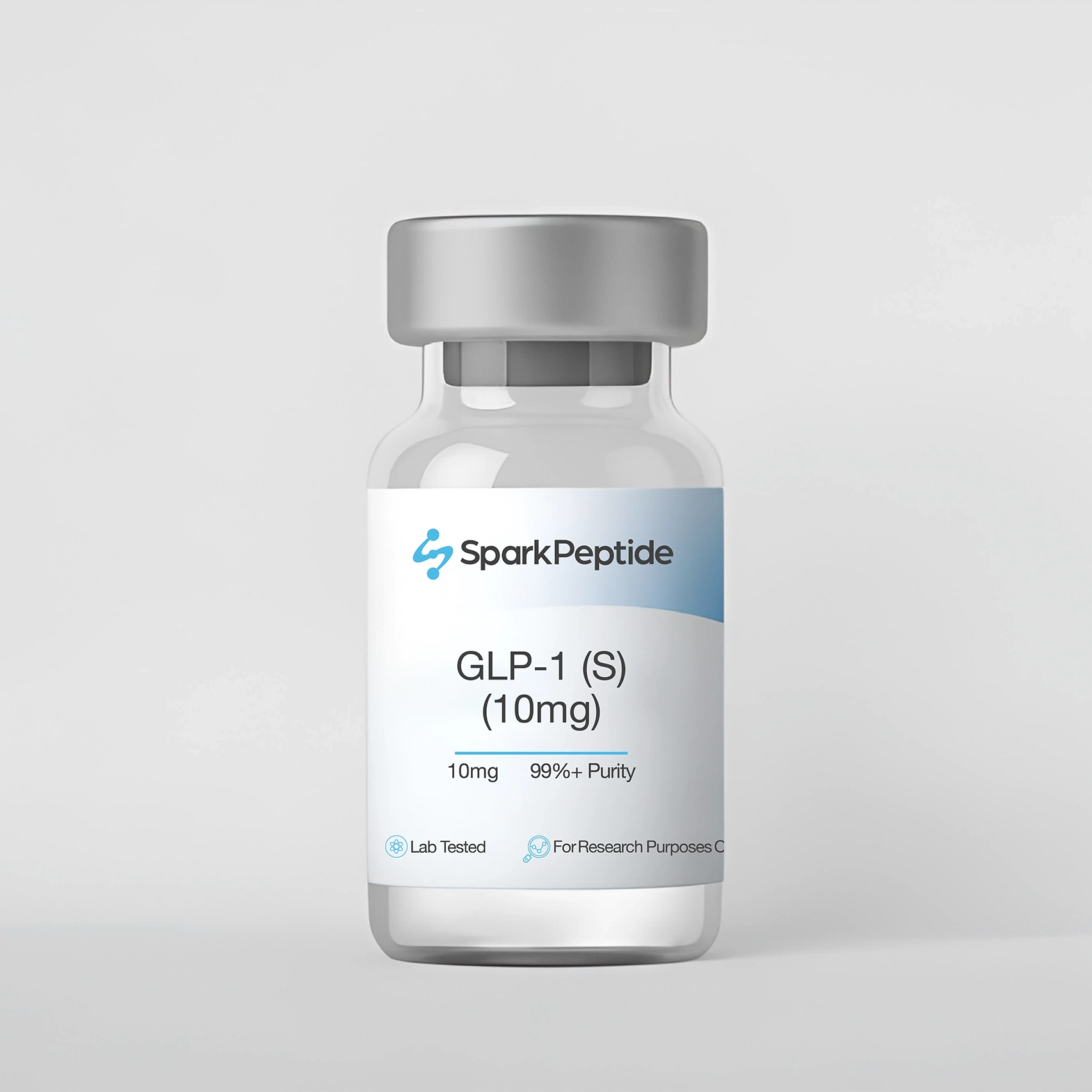
GLP-1 (S)
$69.99
Save 35.01$ (33% Off)
Discount per Quantity
| Quantity | Discount | Price |
|---|---|---|
| 5 - 10 | 5% | $66.49 |
| 11 - 20 | 10% | $62.99 |
| 21+ | 15% | $59.49 |
Rigorous Third-Party Testing
Every batch of our research chemicals and peptides undergoes third-party testing.
*Disclaimer: This product is intended solely for laboratory research purposes. It is not suitable for consumption by humans, nor for medical, veterinary, or household purposes. Kindly review our Terms & Conditions before making a purchase.

Always quality-tested, verified with third party COA’s
At every step, we prioritize quality by conducting rigorous third-party testing on all our products. These tests focus on five key characteristics- identity, purity, sterility, and endotoxin levels, and heavy metal content-ensuring that each product meets the highest standards of quality with independent third-party Certificates of Analysis (COAS) to verify our commitment to excellence.
Identity Test
Purity Test
Sterility Test
Endotoxin Test
Heavy Metals Test
Identity Test
Purity Test
Sterility Test
Endotoxin Test
Heavy Metals Test
*Disclaimer: This product is intended solely for laboratory research purposes. It is not suitable for consumption by humans, nor for medical, veterinary, or household purposes.Kindly review our Terms & Conditions before making a purchase.
GLP-1 (S) Overview
Researchers looking to buy GLP-1 (S) will find Spark Peptide’s formulation well-suited to support controlled investigations of incretin signaling and metabolic regulation. The rigorous safety and identity testing ensures each lot meets consistent purity standards, giving investigators confidence in the reliability of their experimental outcomes. Precise characterization data provided through verified certificates of analysis supports reproducible protocols, making this product a dependable tool for advancing the mechanistic understanding of GLP-1 receptor activation and its downstream physiological effects. GLP-1 (S) is a synthetic peptide modeled after glucagon-like peptide-1, a hormone involved in glucose-dependent insulin signaling and appetite-related pathways. Researchers seeking GLP-1 (S) for sale can obtain a research-grade material suitable for receptor binding assays, metabolic pathway studies, and experimental models examining GLP-1 receptor–mediated cellular signaling.Molecular Origin
GLP-1 (S) is a synthetic analog derived from glucagon-like peptide-1 (GLP-1), a peptide hormone produced through enzymatic processing of the proglucagon precursor protein[1]. Native GLP-1 is secreted primarily by intestinal L-cells and functions as an incretin hormone involved in glucose-dependent insulin secretion and metabolic signaling. The peptide was identified during proglucagon research in the late 1970s and early 1980s, when investigators discovered that specific cleavage products of proglucagon exerted distinct endocrine activities. Synthetic GLP-1 analogs such as GLP-1 (S) are produced using solid-phase peptide synthesis to replicate the biologically active region of the native hormone. This method works by sequentially coupling protected amino acids to a resin-bound growing peptide chain, allowing precise control over sequence assembly. After chain elongation is complete, the peptide is cleaved from the solid support and purified, typically using chromatographic techniques, to isolate the desired sequence with high purity for experimental research applications. This controlled synthesis yields high-purity peptide compounds with strong consistency and reproducibility, enabling researchers to examine GLP-1 receptor interactions, intracellular signaling pathways, and incretin biology in laboratory systems. The defined amino acid sequence and receptor affinity of GLP-1 analogs make them valuable tools for investigating mechanisms of metabolic regulation and hormone-mediated signaling.Purity & Quality Standards
Spark Peptide manufactures GLP-1 (S) to a 99.9%+ purity standard, verified through high-performance liquid chromatography (HPLC) analysis. Production follows cGMP-certified and ISO 9001:2015–aligned quality management systems, ensuring consistent manufacturing conditions and traceable batch documentation. Each production lot undergoes Spark Peptide’s 6X Safety Testing protocol, which includes HPLC purity verification, mass spectrometry identity confirmation, heavy metal screening, endotoxin testing, bacterial contamination analysis, and solubility and stability evaluation. These measures help maintain reproducibility and reliability for laboratory research. For a detailed breakdown of analytical procedures and safety verification, researchers can review the company’s Tests & Safety documentation. To preserve compound integrity during transit, Spark Peptide also uses protective packaging designed to limit exposure to extreme temperature fluctuations during standard shipping. Because the peptide is supplied in a lyophilized form in a glass vial, it maintains greater stability during transport and can tolerate typical ambient conditions when properly packaged. This approach helps ensure the material arrives in a condition suitable for reliable laboratory research.GLP-1 (S) Mechanism of Action
GLP-1 (S) is a stabilized analogue of native glucagon-like peptide-1 that exerts its effects through selective activation of the GLP-1 receptor, a class B G protein-coupled receptor widely expressed in pancreatic β-cells, the central nervous system, and peripheral metabolic tissues.Receptor Binding & Primary Signaling
GLP-1 (S) interacts with the glucagon-like peptide-1 receptor (GLP-1R), a class B G protein–coupled receptor (GPCR) expressed prominently on pancreatic β-cells as well as in the central nervous system and gastrointestinal tissues. Binding of GLP-1 and its synthetic analogs to GLP-1R occurs with high affinity in the nanomolar range, with reported receptor binding constants (Kd) typically in the ~0.5–2 nM range in cellular assays evaluating ligand–receptor interaction[2]. These studies demonstrate selective receptor engagement compared with structurally related peptide hormones derived from proglucagon. Upon receptor binding, GLP-1R undergoes conformational activation that stimulates the Gs protein signaling pathway. This interaction promotes activation of adenylyl cyclase and increases intracellular cyclic adenosine monophosphate (cAMP) levels. Elevated cAMP subsequently activates protein kinase A (PKA) and exchange protein directly activated by cAMP (Epac), initiating intracellular signaling events that influence insulin secretion and cellular metabolic regulation[3]. The receptor’s ligand recognition domain interacts specifically with the N-terminal region of GLP-1 peptides, a structural feature critical for receptor activation and signal transduction. Structural studies of GLP-1R complexes have shown that precise peptide positioning within the receptor’s extracellular domain stabilizes the active receptor conformation, enabling downstream signaling processes central to incretin biology[4].Downstream Biological Cascades
Activation of GLP-1 receptors by GLP-1 analogs initiates multiple downstream signaling cascades that regulate metabolic and endocrine processes. Elevated intracellular cAMP activates protein kinase A (PKA) and Epac-mediated signaling, which together enhance calcium influx into pancreatic β-cells and facilitate insulin granule exocytosis in glucose-dependent conditions[3]. These pathways also influence transcriptional regulation of genes associated with β-cell survival, insulin biosynthesis, and metabolic homeostasis. Beyond the cAMP pathway, GLP-1 receptor signaling has been shown to engage several additional intracellular cascades, including phosphatidylinositol 3-kinase (PI3K)/Akt and mitogen-activated protein kinase (MAPK/ERK) signaling pathways. Activation of these pathways contributes to cellular processes such as gene expression modulation, β-cell proliferation signals, and protection against apoptosis in experimental models[1]. GLP-1 signaling has also been associated with modulation of glucagon secretion from pancreatic α-cells and delayed gastric emptying mechanisms through neural and endocrine pathways[6]. In experimental systems, these coordinated signaling responses illustrate how GLP-1 receptor activation integrates multiple metabolic regulatory networks, making GLP-1 analogs useful tools for studying incretin biology, glucose homeostasis, and endocrine signaling dynamics.Key Scientific Features & Chemical Profile of GLP-1 (S)
Produced using solid-phase peptide synthesis, GLP-1 (S) is designed to maintain structural fidelity to the native hormone while providing consistent material for laboratory investigations. Its well-characterized receptor affinity and defined biochemical properties make it a widely used compound in experimental models examining GLP-1 receptor signaling, metabolic regulation, and endocrine pathway interactions.Molecular Data
| Property | Value |
| Molecular Formula | C149H226N40O45 |
| Molecular Weight | 3297.6 g/mol |
| Amino Acid Sequence | HAEGTFTSDVSSYLEGQAAKEFIAWLVKGR |
| CAS Number | 107444-51-9 |
| PubChem CID | 16133831 |
| Synonyms | Glucagon-Like Peptide 1, GLP-1 |
| Physical Form | Lyophilized white powder |
| Solubility | Soluble in water, PBS, and DMSO |
| Storage | -4°F (-20°C), desiccated, protected from light |
Analytical Verification
Every batch of GLP-1 (S) from Spark Peptide undergoes a multi-stage validation process. This ensures that the compound meets strict biochemical specifications before it reaches the laboratory setting. Each shipment is accompanied by a Certificate of Analysis (COA), which serves as a transparent record of the following testing phases:Core Analytical Testing
- High-Performance Liquid Chromatography (HPLC): This is the gold standard for determining chemical purity. By passing the peptide through a specialized column under high pressure, the sample is separated into its individual components. Spark Peptide utilizes this to quantify the percentage of the target peptide, ensuring a standard of 99.9%+ purity.
- Mass Spectrometry (MS): While HPLC confirms purity, Mass Spectrometry confirms identity. This process measures the mass-to-charge ratio of the molecules. By comparing the "observed" molecular mass against the "theoretical" mass of the GLP-1 amino acid sequence, the lab verifies that the batch is exactly the compound intended.
The 6X Safety Testing Protocol
Beyond the standard identity and purity checks, Spark Peptide implements a comprehensive safety screen to eliminate variables that could interfere with research data:- Heavy Metals Screening: Ensures the absence of toxic elements (like lead or mercury) that can be introduced during the synthesis process.
- Endotoxin Testing: A critical check for lipopolysaccharides (cell wall components of certain bacteria) that can cause unwanted inflammatory responses in research models.
- Bacterial Contamination Analysis: Verifies the absolute sterility of the lyophilized powder.
- Solubility Verification: Confirms the peptide dissolves correctly in standard buffers, ensuring ease of use in the lab.
- Stability Testing: Analyzes the compound’s resilience to degradation over time and under various temperature conditions.
- Batch-Specific Re-Verification: A final cross-check to ensure the physical data matches the digital records for that specific production run.
Storage, Handling, and Reconstitution
To ensure the structural integrity and potency of GLP-1 (S) for laboratory use, precise adherence to standardized storage and preparation protocols is essential.Recommended Storage Conditions
GLP-1 (S) should be stored in its lyophilized form at -4°F (-20°C) in a dry, light-protected environment to preserve peptide stability. Vials should remain tightly sealed in their original container and protected from moisture exposure. Under these conditions, lyophilized peptides typically maintain stability for extended periods when kept desiccated. After reconstitution, the solution should be refrigerated at 36.6–46.4°F (2–8°C) and used within a limited timeframe according to laboratory protocol to minimize degradation.Reconstitution Protocol
GLP-1 (S) can be reconstituted using sterile bacteriostatic water (see Spark Peptide’s Bacteriostatic Water 10ml).- Begin by allowing the vial to reach room temperature before adding solvent.
- Slowly introduce the desired volume of bacteriostatic water along the inner wall of the vial to minimize foaming.
- Avoid vortexing; instead, gently swirl the vial until the peptide fully dissolves. The resulting solution should appear clear and free of visible particulates.
- After reconstitution, store the solution refrigerated at 36.6–46.4°F (2–8°C) and avoid repeated temperature fluctuations.
Handling Precautions
Handle GLP-1 (S) using standard laboratory safety practices within a clean, controlled environment. Avoid repeated freeze–thaw cycles, which may compromise peptide integrity. Use appropriate personal protective equipment (PPE), including gloves and lab coats. This product is supplied strictly for laboratory research use only and should be handled by qualified professionals.GLP-1 (S) Research & Scientific Applications
GLP-1 (S) is widely used in laboratory research examining incretin signaling, glucose homeostasis, and endocrine regulation. As a synthetic analog of glucagon-like peptide-1, it serves as a tool for studying GLP-1 receptor activation, intracellular signaling cascades, and metabolic regulatory pathways. Researchers employ GLP-1 peptides in controlled experimental systems to investigate receptor pharmacology, hormone secretion dynamics, and the molecular mechanisms underlying incretin-mediated metabolic signaling.Preclinical & Diagnostic Research
GLP-1 peptides are extensively utilized in preclinical research to investigate incretin hormone signaling and glucose-dependent insulin regulation. In vitro assays commonly employ GLP-1 analogs to evaluate receptor binding kinetics, intracellular cyclic AMP (cAMP) production, and β-cell secretory responses following GLP-1 receptor activation[5]. These systems allow investigators to quantify receptor signaling activity and downstream transcriptional responses associated with metabolic regulation. In vitro studies using pancreatic β-cell lines and isolated islet preparations have demonstrated that GLP-1 receptor activation stimulates cAMP accumulation and promotes insulin secretion under glucose-dependent conditions. Published findings indicate that GLP-1 signaling enhances β-cell responsiveness to glucose while activating intracellular pathways such as protein kinase A (PKA) and exchange protein directly activated by cAMP (Epac), both of which contribute to insulin granule exocytosis[3]. GLP-1 peptides have also been investigated in diagnostic research contexts involving incretin biology and metabolic signaling. Preclinical data suggest that GLP-1 receptor activation can modulate glucagon secretion, gastric motility signaling, and central appetite-related pathways, making the peptide valuable in experimental systems examining integrated endocrine regulation[6]. In laboratory assays, researchers often measure endpoints such as insulin secretion rates, cAMP signaling levels, calcium influx, and gene expression changes linked to β-cell metabolic activity.Animal Model Observations
Animal research models have provided important insights into the physiological responses associated with GLP-1 receptor activation. Rodent and murine studies have been widely used to investigate the role of GLP-1 signaling in glucose metabolism, pancreatic hormone regulation, and metabolic homeostasis. In these models, investigators commonly evaluate biomarkers such as plasma insulin concentrations, blood glucose dynamics, glucagon secretion levels, and pancreatic β-cell signaling activity. Experimental findings in rodent models indicate that GLP-1 receptor activation enhances glucose-stimulated insulin secretion while suppressing glucagon release under hyperglycemic conditions. In controlled murine studies, GLP-1 signaling has been associated with improved glucose tolerance and measurable increases in circulating insulin levels following glucose challenge experiments[1]. Additional animal model observations have shown that GLP-1 receptor activation influences gastrointestinal and central regulatory pathways involved in metabolic control. Studies in rodent systems have reported delayed gastric emptying and altered feeding behavior associated with GLP-1 receptor signaling pathways, highlighting the peptide’s role in coordinated metabolic regulation[6]. Beyond endocrine responses, animal studies have also examined intracellular signaling activity in pancreatic tissues, including activation of PI3K/Akt and MAPK/ERK pathways linked to β-cell survival and metabolic signaling regulation[5]. These experimental findings continue to support the use of GLP-1 peptides as research tools for investigating incretin biology and endocrine signaling networks.GLP-1 (S) Comparative Analysis
GLP-1 (S) belongs to a class of incretin-related peptides widely studied for their interaction with the glucagon-like peptide-1 receptor (GLP-1R). In research contexts, it is often compared with longer-acting GLP-1 receptor agonists such as semaglutide and dual-receptor peptides such as tirzepatide. While these analogs share a common incretin signaling framework, they differ substantially in structural modification, receptor selectivity, and experimental pharmacokinetics. Native GLP-1–derived peptides such as GLP-1 (S) closely replicate the endogenous hormone sequence and therefore exhibit high receptor specificity but comparatively shorter biological persistence in experimental systems. Modified analogs like semaglutide incorporate structural substitutions that increase resistance to enzymatic degradation, enabling longer receptor engagement in experimental models. Tirzepatide, by contrast, is engineered to activate both GLP-1 and glucose-dependent insulinotropic polypeptide (GIP) receptors, creating a broader incretin signaling profile. These distinctions influence the type of laboratory investigations each compound supports. GLP-1 (S) is frequently used in receptor signaling assays and mechanistic incretin studies, while longer-acting analogs are commonly utilized in metabolic pathway and receptor pharmacology research comparing multi-pathway incretin signaling.| Parameter | GLP-1 (S) | Retatrutide | GLP-2 (T) |
| Half-life | Short (native incretin peptide kinetics) | Extended; engineered for prolonged receptor engagement | Extended; dual-incretin peptide |
| Receptor Selectivity | High GLP-1 receptor specificity | Triple agonist: GLP-1, GIP, and glucagon receptors | Dual GLP-1 / GIP receptor activity |
| Primary Mechanism | GLP-1 receptor activation and incretin signaling | Multi-receptor incretin and glucagon pathway activation | Dual incretin receptor signaling |
| Research Applications | Receptor signaling assays, incretin pathway studies | Multi-pathway metabolic signaling and receptor interaction studies | Dual incretin pathway investigations |
Peer-Reviewed Research & Citations
- Müller TD, Finan B, Bloom SR, D'Alessio D, Drucker DJ, Flatt PR, Fritsche A, Gribble F, Grill HJ, Habener JF, Holst JJ, Langhans W, Meier JJ, Nauck MA, Perez-Tilve D, Pocai A, Reimann F, Sandoval DA, Schwartz TW, Seeley RJ, Stemmer K, Tang-Christensen M, Woods SC, DiMarchi RD, Tschöp MH. "Glucagon-like peptide 1 (GLP-1)." Molecular Metabolism, vol. 30, pp. 72–130, 2019. PMID: 31767182 / DOI: 10.1016/j.molmet.2019.09.010
- van der Velden WJC, Smit FX, Christiansen CB, Møller TC, Hjortø GM, Larsen O, Schiellerup SP, Bräuner-Osborne H, Holst JJ, Hartmann B, Frimurer TM, Rosenkilde MM. "GLP-1 Val8: A Biased GLP-1R Agonist with Altered Binding Kinetics and Impaired Release of Pancreatic Hormones in Rats." ACS Pharmacology & Translational Science, vol. 4, no. 1, pp. 296–313, 2021. PMID: 33615180 / DOI: 10.1021/acsptsci.0c00193
- Meloni AR, DeYoung MB, Lowe C, Parkes DG. "GLP-1 receptor activated insulin secretion from pancreatic β-cells: mechanism and glucose dependence." Diabetes, Obesity and Metabolism, vol. 15, no. 1, pp. 15–27, 2013. PMID: 22776039 / DOI: 10.1111/j.1463-1326.2012.01663.x
- Austin G, Tomas A. "Signaling architecture of the glucagon-like peptide-1 receptor." Journal of Clinical Investigation, vol. 136, no. 2, 2026. PMID: 41542774 / DOI: 10.1172/JCI194752
- Manandhar B, Ahn JM. "Glucagon-like peptide-1 (GLP-1) analogs: recent advances, new possibilities, and therapeutic implications." Journal of Medicinal Chemistry, vol. 58, no. 3, pp. 1020–1037, 2015. PMID: 25349901 / DOI: 10.1021/jm500810s
- Liu QK. "Mechanisms of action and therapeutic applications of GLP-1 and dual GIP/GLP-1 receptor agonists." Frontiers in Endocrinology, vol. 15, 2024, Article 1431292. PMID: 39114288 / DOI: 10.3389/fendo.2024.1431292
Certificate of Analysis & Lab Reports
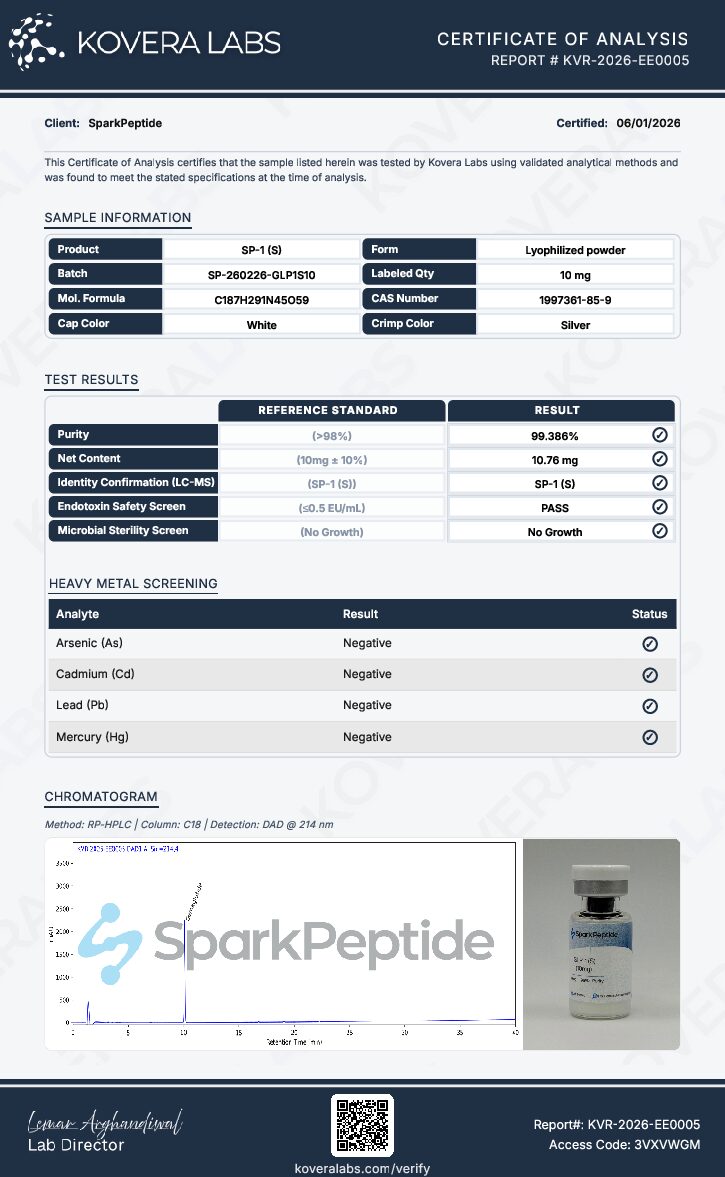
Every Spark Peptide product is supplied with batch-specific analytical documentation generated by independent third-party laboratories. These reports verify compound identity, purity, and safety parameters for each manufacturing lot. As part of Spark Peptide’s 6X Safety Testing protocol, researchers receive transparent laboratory verification supporting reproducibility and confidence in experimental applications.Certificate of Analysis (COA)
The Certificate of Analysis (COA) provides batch-specific analytical verification for the supplied peptide. It confirms compound identity, purity levels, and safety screening results using validated laboratory methods. The document also includes testing dates, analytical techniques, and traceable lot information to ensure full transparency for researchers working with this manufacturing batch.HPLC Analysis Report
High-Performance Liquid Chromatography (HPLC) is used to verify the peptide’s purity by separating the target compound from potential synthesis byproducts or trace impurities. The chromatographic profile provides a quantitative purity measurement based on peak integration analysis. This method allows researchers to confirm the chemical composition and purity of the batch prior to experimental use.Mass Spectrometry Report
Mass spectrometry confirms the molecular identity of the peptide by measuring the compound’s mass-to-charge ratio (m/z). The observed molecular mass obtained from the spectrum is compared with the theoretical mass expected for the peptide sequence. Agreement between these values verifies the structural identity of the compound supplied for research use.Additional Safety Screening
In addition to purity and identity verification, Spark Peptide applies further safety screening as part of its 6X Safety Testing protocol. This includes heavy metals testing for lead, mercury, arsenic, and cadmium, endotoxin detection using the Limulus Amebocyte Lysate (LAL) assay, and bacterial contamination screening. These tests help confirm that the compound meets laboratory quality standards. Full analytical reports are available upon request or through the Spark Peptide Tests & Safety page.Why 6X Safety Testing Matters for Your Research
While most suppliers verify purity alone, every SparkPeptide batch passes six independent quality and safety screenings before reaching your laboratory.| # | Test | What It Confirms |
| 1 | HPLC Purity Analysis | Peptide purity at 99.9%+ via reverse-phase chromatography |
| 2 | Mass Spectrometry | Correct molecular identity (observed vs. expected mass) |
| 3 | Heavy Metal Screening | Below detectable limits for lead, mercury, arsenic, cadmium |
| 4 | Endotoxin Testing | Bacterial endotoxin levels within safe research thresholds (LAL assay) |
| 5 | Bacterial Contamination | No microbial growth detected in culture testing |
| 6 | Solubility & Stability | Proper reconstitution behavior and structural integrity confirmed |
Legal Disclaimer
For Laboratory Research Use Only. All products sold by Spark Peptide are strictly intended for laboratory research use only. These materials are not for human consumption and are not intended for medical, veterinary, diagnostic, or household use of any kind. Spark Peptide operates solely as a research chemical supplier. We are not a compounding pharmacy and do not operate as a compounding facility as defined under Section 503A of the Federal Food, Drug, and Cosmetic Act. Additionally, Spark Peptide is not registered as an outsourcing facility under Section 503B of the Act. By purchasing from our site, you agree to use our products exclusively for lawful laboratory research purposes. Any misuse is strictly prohibited.Product FAQ for Researchers
What purity level does SparkPeptide’s GLP-1 (S) achieve?
SparkPeptide’s GLP-1 (S) is produced to a 99.9%+ purity standard verified by reverse-phase High-Performance Liquid Chromatography (RP-HPLC). Each manufacturing lot undergoes Spark Peptide’s 6X Safety Testing protocol, which includes identity confirmation via mass spectrometry along with screening for heavy metals, endotoxins, bacterial contamination, and solubility/stability verification. Batch-specific analytical results are documented in the Certificate of Analysis provided with each order.How should I reconstitute GLP-1 (S)?
GLP-1 (S) is supplied as a lyophilized peptide and should be reconstituted using sterile bacteriostatic water. Allow the vial to reach room temperature before adding solvent, then slowly introduce the solution along the vial wall. Gently swirl to dissolve; avoid vortexing. The solution should appear clear once fully dissolved. For convenience, researchers can use SparkPeptide’s Bacteriostatic Water (10 mL) product for standard laboratory reconstitution protocols.What is the shelf life of GLP-1 (S)?
When stored in its lyophilized form at -4°F (-20°C) in a dry, light-protected environment, GLP-1 (S) can maintain stability for extended storage periods. Once reconstituted, the peptide solution should be refrigerated at 36–46°F (2–8°C) and used within a limited timeframe according to laboratory protocol to minimize degradation. Avoid repeated freeze–thaw cycles, which may affect peptide integrity.Does this product come with a Certificate of Analysis?
Yes. Every SparkPeptide GLP-1 (S) order includes a batch-specific Certificate of Analysis (COA) generated through independent laboratory testing. The COA documents identity confirmation, purity verification, and safety screening results for the specific manufacturing lot supplied. Researchers can also download the COA directly from the product page to review analytical verification before initiating experimental work.What makes GLP-1 (S) useful for receptor signaling studies?
GLP-1 (S) closely replicates the biologically active region of the native glucagon-like peptide-1 hormone, enabling precise investigation of GLP-1 receptor–mediated signaling pathways. Researchers commonly use this peptide in receptor binding assays, intracellular signaling studies, and metabolic pathway investigations. Its defined amino acid sequence and well-characterized receptor affinity make it a reliable tool for studying incretin biology in controlled laboratory models.| Property | Detail |
|---|---|
| Name | GLP-1 (S) (Synthetic Glucagon-Like Peptide-1 Analogue) |
| Sequence | Modified peptide based on human GLP-1 (7-37) backbone with non-native substitutions to enhance stability |
| Molecular Formula | C187H291N45O59 |
| Molecular Weight | 4113.641 g/mol |
| PubChem CID | 56843331 |
| Receptor Target | GLP-1 Receptor (GLP-1R) — Class B G protein-coupled receptor |
| Format | Lyophilized powder for reconstitution |
| Purity | ≥99%, verified by lot-specific Certificates of Analysis (COAs) |
| Solubility | Soluble in bacteriostatic water or appropriate buffered aqueous solutions; avoid organic solvents until dissolved |
| Storage (Unreconstituted) | 2–8°C (36–46°F) for routine use; –20°C to –29°C (–4°F to –20°F) for extended storage; protect from light and humidity |
| Storage (Reconstituted) | 2–8°C (36–46°F); aliquot to avoid repeated freeze–thaw cycles |
| Stability | Lyophilized format supports enhanced shelf life when stored refrigerated or frozen; reconstituted solutions should be used promptly |
| Handling Notes | Handle under inert conditions for prolonged storage; protect from repeated freeze–thaw cycles |
| Research Designation | For research use only; not approved for human or veterinary use |
| Supplier | Spark Peptide |
Related products
-
Peptides
GHK-Cu
$54.99 – $79.99Price range: $54.99 through $79.99 Purchase & earn 80 points!Select options