Satisfaction
Guaranteed

All products are handled with strict quality standards to ensure consistent research-grade excellence.

Secure
Ordering

Our checkout is SSL encrypted and completely secure.

Third-party
Tested

Our products are verified by independent third party laboratories to meet quality standards.

Batch & Lot
Tracking

All product batches and lots are assigned unique identifiers and tied to publicly posted lab reports.

Endless
Commitment

We are committed to helping our customers. If you have any questions or concerns, please reach out through our Contact Us page.

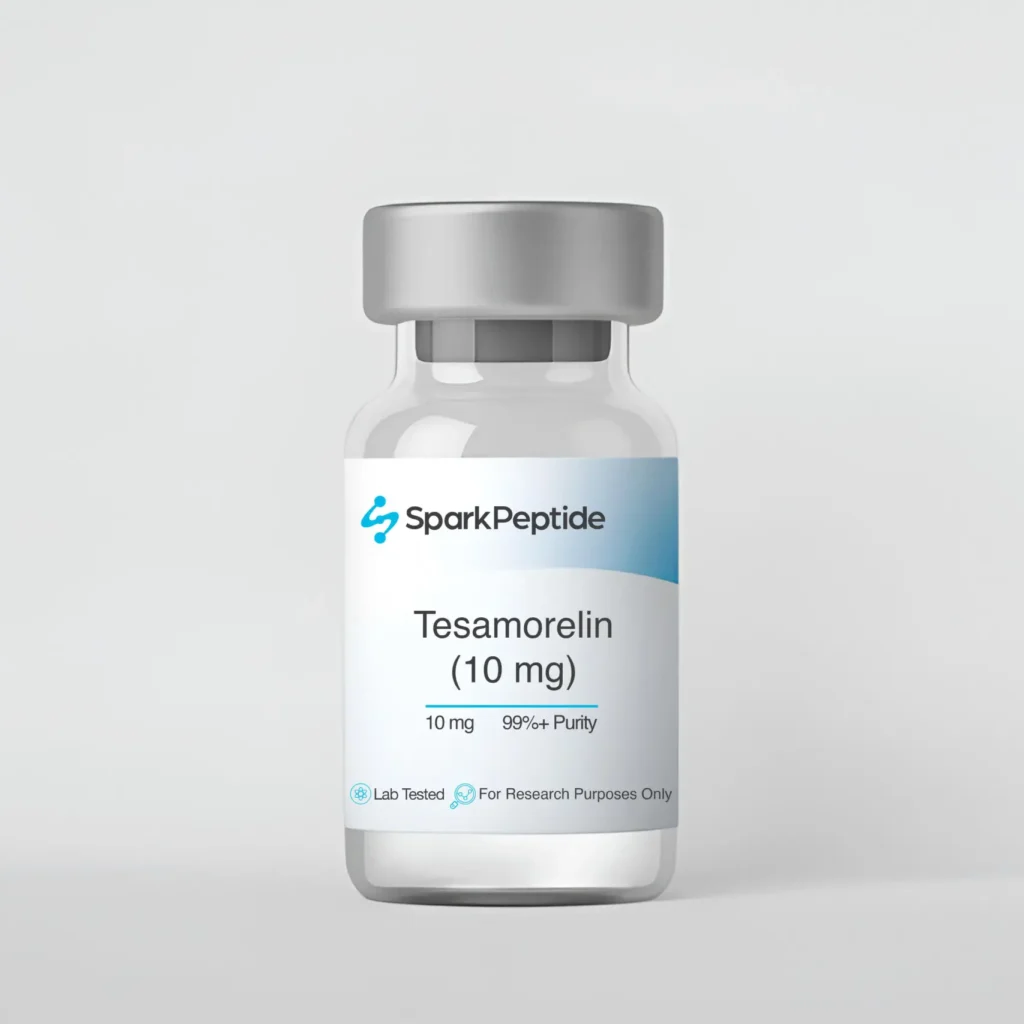
Tesamorelin (10mg)

Original price was: $100.00.Current price is: $89.99.

Save 10.01$ (10% Off)

Purchase & earn 90 points!

Discount per Quantity

QuantityDiscountPrice
5 - 105%$85.49
11 - 2010%$80.99
21+15%$76.49

Rigorous Third-Party Testing

Every batch of our research chemicals and peptides undergoes
third-party testing.

*Disclaimer: This product is intended solely for laboratory research purposes. It is not suitable for consumption by humans, nor for medical, veterinary, or household purposes. Kindly review our Terms & Conditions before making a purchase.

Always quality-tested, verified with third party COA’s


At every step, we prioritize quality by conducting rigorous third-party testing on all our products. These tests focus on five key characteristics- identity, purity, sterility, and endotoxin levels, and heavy metal content-ensuring that each product meets the highest standards of quality with independent third-party Certificates of Analysis (COAS) to verify our commitment to excellence.

Identity Test

Identity testing ensures that the product contains the correct ingredient as labeled, verifying its authenticity and matching it to established reference standards.

Purity Test

Purity and concentration testing verifies that the ingredient is present in the correct amount, with a purity of 99% or higher to meet stringent quality standards.

Sterility Test

Sterility testing ensures that the product is completely free from bacteria, fungi, and other microorganisms.

Endotoxin Test

Endotoxicity testing specifically detects and quantifies lipopolysaccharides (LPS), components of bacterial cell walls, to ensure the product is free from endotoxins.

Heavy Metals Test

Heavy metals testing ensures that the product is free of heavy metals such as lead, arsenic, mercury, cadmium, and other heavy metals.

Identity Test

Identity testing ensures that the product contains the correct ingredient as labeled, verifying its authenticity and matching it to established reference standards.

Purity Test

Purity and concentration testing verifies that the ingredient is present in the correct amount, with a purity of 99% or higher to meet stringent quality standards.

Sterility Test

Sterility testing ensures that the product is completely free from bacteria, fungi, and other microorganisms.

Endotoxin Test

Endotoxicity testing specifically detects and quantifies lipopolysaccharides (LPS), components of bacterial cell walls, to ensure the product is free from endotoxins.

Heavy Metals Test

Heavy metals testing ensures that the product is free of heavy metals such as lead, arsenic, mercury, cadmium, and other heavy metals.

*Disclaimer: This product is intended solely for laboratory research purposes. It is not suitable for consumption by humans, nor for medical, veterinary, or household purposes.Kindly review our Terms & Conditions before making a purchase.

Tesamorelin Overview

Researchers looking to buy tesamorelin peptide typically do so for controlled studies of GHRH receptor activation, pulsatile growth hormone signaling, and IGF-1–linked endocrine pathways. Tesamorelin is a synthetic GRF analog engineered from the native 44-amino-acid human sequence, and Spark Peptide is the trusted source for research-grade tesamorelin backed by HPLC-verified purity exceeding 99.9%, a rigorous 6-point safety testing protocol, and batch-specific Certificate of Analysis. Every lot is tested and verified to meet the analytical demands of receptor signaling assays, endocrine pathway studies, and laboratory models of hormone regulation.

Molecular Origin

Tesamorelin is a synthetic analog of human growth hormone–releasing factor, also called growth hormone–releasing hormone, a hypothalamic peptide that stimulates pituitary somatotrophs through the GHRH receptor[1]. The parent hormone was characterized in the early 1980s during work on ectopic and hypothalamic GRF peptides, after which sustained effort went into designing longer-acting analogs with preserved receptor activity. Tesamorelin retains the 44-amino-acid GRF sequence but incorporates an N-terminal trans-3-hexenoyl modification on tyrosine, a structural change used to improve resistance to enzymatic degradation while preserving GRF-like receptor stimulation. Like other precision research peptides, it is assembled by solid-phase peptide synthesis, which enables stepwise amino acid coupling and tight sequence control. This combination of native-sequence fidelity and stabilization makes tesamorelin useful for studying GHRHR binding, cAMP-linked signaling, GH pulse dynamics, and downstream endocrine regulation. 

Purity & Quality Standards

Spark Peptide supplies research-grade peptides manufactured to 99.9%+ HPLC-verified purity in cGMP-compliant facilities operating under ISO 9001:2015 quality systems. Every order is supported by our comprehensive 6X Safety Testing protocol, encompassing HPLC purity analysis, mass spectrometry identity confirmation, heavy metals screening, endotoxin testing, bacterial contamination analysis, and solubility and stability verification. Accordingly, a batch-specific Certificate of Analysis is available on our product pages for review. For stability in shipping, Spark Peptide  maintains temperature-conscious shipping practices and protective packaging designed to minimize transit stress on lyophilized material, preserving integrity from fulfillment to the laboratory. The result is a fully traceable, reproducibility-focused supply chain that researchers can rely on for consistent analytical performance across every lot.

Tesamorelin Mechanism of Action

Tesamorelin's research utility stems from its ability to engage native pituitary signaling architecture with high receptor fidelity, making it a precise experimental tool for studying the GHRH axis from receptor activation through to downstream endocrine and metabolic responses.

Receptor Binding & Primary Signaling

Tesamorelin acts as an agonistic analog of endogenous GRF/GHRH at the human growth hormone–releasing hormone receptor (GHRHR), a class B G protein-coupled receptor expressed primarily on pituitary somatotroph cells[2]. The peptide binds and stimulates human GRF receptors in vitro with potency comparable to endogenous GRF, which is a critical benchmark for experimental validity. Structurally, GHRHR follows the typical class B GPCR arrangement: the extracellular domain engages the peptide's C-terminal region, while the ligand N-terminus inserts into the extracellular transmembrane core to stabilize the active receptor state. Cryo-EM characterization of the human GHRHR–G protein complex demonstrates that this binding mode drives the conformational rearrangement required for Gs coupling, most notably through TM6 displacement that opens the intracellular face for downstream signaling. The immediate functional consequence is adenylate cyclase activation, cAMP accumulation, and stimulation of both GH synthesis and pulsatile secretion. In short, tesamorelin is mechanistically valuable precisely because it preserves native GHRHR biology while offering a structurally stabilized experimental ligand with greater resistance to enzymatic degradation than unmodified endogenous peptide[1].

Downstream Biological Cascades

Once GHRHR is engaged, signaling proceeds primarily through the cAMP/PKA axis, which governs both acute secretory events and longer-term transcriptional regulation within somatotrophs. This pathway intersects with broader downstream networks, including calcium-dependent secretion machinery and MAPK-linked transcriptional responses, that have been described across the class B GPCR family. Foundational mechanistic work established that GHRF can stimulate GH gene transcription independently of immediate secretory output, confirming that the pathway operates across both rapid and sustained regulatory timescales[3]. In clinical tesamorelin studies, these systems-level effects are clearly preserved: short-term administration produced measurable increases in mean overnight GH, GH peak area, basal GH secretion, and IGF-1, which is consistent with augmentation of endogenous pulsatile output rather than direct GH replacement. Population PK/PD modeling further characterized tesamorelin as producing finite episodic stimulation of GH secretion, with IGF-1 trajectories closely tracking the induced GH signal[4]. For laboratory research, this makes tesamorelin a well-characterized tool for experiments designed to interrogate endocrine pulse architecture, IGF-axis biomarker responses, transcriptional regulation, and metabolic signaling downstream of native pituitary receptor activation.

Key Scientific Features & Chemical Profile of Tesamorelin

Understanding tesamorelin's physicochemical properties is essential for accurate experimental design, proper handling, and interpreting receptor-level activity in laboratory research settings.

Molecular Data

Property Value
Molecular Formula C221H366N72O67S
Molecular Weight 5136 g/mol
Amino Acid Sequence YADAIFTNSYRKVLGQLSARKLLQDIMSRQQGESNQERGARARL
CAS Number 218949-48-5
PubChem CID 16137828
Synonyms Tesamorelin, TH9507, Tesamorelina, Tesamoreline
Physical Form Lyophilized white to off-white powder
Solubility Reconstituted in bacteriostatic water; product solution should appear clear and colorless after proper preparation
Storage -4°F (-20°C), desiccated, protected from light

Analytical Verification

Every batch of tesamorelin supplied by Spark Peptide is accompanied by a batch-specific Certificate of Analysis (CoA), providing full documentation of lot-level analytical results, identity confirmation, and purity verification. This gives researchers the traceability and transparency required for rigorous experimental work. Peptide purity is assessed using High-Performance Liquid Chromatography (HPLC), a gold-standard separation technique that quantifies the target compound relative to any residual impurities, synthesis byproducts, or degradation products present in the sample matrix, with Spark Peptide's verified threshold set at 99.9%+ purity. Molecular identity is also independently confirmed through mass spectrometry, which determines the precise observed molecular mass of the peptide and validates it against the theoretical mass predicted by the target amino acid sequence. This rigorous testing process provides orthogonal confirmation that the correct compound has been synthesized with the intended primary structure. Beyond manufacturing-level purity and identity, every batch is subject to Spark Peptide's comprehensive 6X Safety Testing protocol with third-party labs, which incorporates four additional layers of analytical screening critical to laboratory confidence:
  • Heavy metals screening: detects trace elemental contaminants including lead, mercury, arsenic, and cadmium, which can interfere with cell-based assays and corrupt biological readouts
  • Endotoxin testing: quantifies bacterial lipopolysaccharide (LPS) levels, a particularly important parameter given endotoxins' well-documented capacity to trigger non-specific inflammatory responses and confound in vitro experimental results
  • Bacterial contamination analysis: confirms microbiological purity to eliminate viable bacterial presence that could compromise both sample stability and the integrity of downstream experimental outcomes
  • Solubility and stability assessment: validates predictable dissolution behavior under defined reconstitution conditions and confirms that peptide potency and structural integrity are maintained throughout the recommended storage period
Collectively, these procedures address sequence integrity, chromatographic purity, contamination risk, and handling-relevant stability in a single unified release framework. This supports experimental reproducibility and analytical confidence from lot release through to laboratory use, which is especially important for our institutional clients.

Storage, Handling, and Reconstitution

Maintaining tesamorelin's structural integrity from receipt through to experimental use requires adherence to controlled storage conditions, careful reconstitution technique, and standard laboratory handling practices.

Recommended Storage Conditions

Lyophilized tesamorelin should be stored at -20°C (-4°F) in its original sealed vial under dry, desiccated conditions, protected from both light and moisture. Exposure to humidity or photodegradation can accelerate structural breakdown and compromise analytical purity, making environmental control a prerequisite for maintaining batch integrity throughout the storage period. Under these recommended conditions, lyophilized tesamorelin typically remains stable for up to 24 months from the date of manufacture. Following reconstitution, the resulting peptide solution should be transferred immediately to refrigerated storage at 2–8°C (36–46°F). Reconstituted solutions carry a significantly reduced stability window relative to lyophilized material and should be treated as short-term laboratory preparations rather than long-term stocks, with use completed within standard laboratory stability timeframes to prevent potency loss or degradation.

Reconstitution Protocol

Precise reconstitution technique is essential for preserving peptide integrity and producing a consistent, well-characterized working solution suitable for downstream experimental use.
  1. Remove the tesamorelin vial from frozen storage and allow it to fully equilibrate to room temperature before opening, preventing condensation from introducing moisture into the lyophilized material.
  2. Prepare sterile bacteriostatic water as the reconstitution solvent. Bacteriostatic Water (10 mL) from Spark Peptide is recommended for assured sterility and compatibility with research-grade peptide preparation.
  3. Draw the desired solvent volume and introduce it slowly along the interior wall of the vial rather than directly onto the lyophilized cake, minimizing foaming, mechanical disruption, and potential peptide aggregation.
  4. A typical laboratory preparation uses 1.0–2.0 mL of solvent, adjusted according to the target working concentration required for the specific experimental application.
  5. Do not vortex. Gently swirl or rotate the vial until the peptide is fully dissolved — aggressive agitation can introduce air bubbles, promote aggregation, or cause structural degradation that compromises solution quality.
  6. Visually inspect the final solution; it should appear clear, colorless, and completely free of visible particulates. Turbidity or precipitate may indicate incomplete dissolution or compromised peptide integrity and should be investigated before use.
  7. Transfer the reconstituted solution to refrigerated storage at 2–8°C (36–46°F) immediately following preparation and minimize unnecessary handling between uses to preserve stability.

Handling Precautions

  • All procedures should be conducted in a clean, controlled laboratory environment to prevent introduction of contaminants that could affect sample quality or experimental outcomes
  • Repeated freeze–thaw cycles must be strictly avoided following reconstitution, as thermal cycling accelerates peptide degradation and reduces solution stability over time
  • Appropriate personal protective equipment (PPE), including nitrile gloves and a laboratory coat, should be worn throughout all handling and preparation procedures
  • Researchers should follow institutional sterile or low-bioburden handling protocols and applicable regulatory guidelines governing the use of research-grade peptide compounds
  • Tesamorelin supplied by Spark Peptide is intended strictly for in vitro and laboratory research applications and is not approved for human or veterinary use

Tesamorelin Research & Scientific Applications

Tesamorelin is primarily relevant to endocrine and metabolic research built around GHRHR activation, pulsatile GH output, and downstream IGF-1 signaling. Published findings support its use as a precision research ligand for interrogating pituitary secretory dynamics, metabolic biomarker responses, body-composition signaling, and secondary transcriptomic changes in GH-responsive biological systems.

Preclinical & In Vitro Research

In vitro and mechanistic research on the GHRH/GHRHR axis establishes a clear laboratory role for tesamorelin, even where the direct compound literature skews more translational than cell-biological. GHRHR is a class B GPCR whose activation drives cAMP-dependent signaling in somatotrophs, making tesamorelin a valuable stabilized ligand for receptor pathway investigations, second-messenger studies, and endocrine pulse modeling[5]. Structural characterization of the human GHRHR, including cryo-EM resolution of its extracellular binding geometry and Gs-coupled activation mechanism, strengthens the rationale for deploying GRF analogs in receptor conformation and downstream signaling studies.  Classical endocrine experiments have further demonstrated that GHRF signaling can independently regulate GH gene transcription, meaning investigators can simultaneously track both acute secretory and longer-term transcriptional endpoints when working with pathway agonists[6]. In applied human experimental settings, tesamorelin has been shown to increase overnight GH, GH pulse area, and circulating IGF-1 without exogenously replacing GH, which is a critical distinction for studies designed to preserve physiological pituitary control loops and interrogate native feedback dynamics. Published systems-level research has additionally associated tesamorelin exposure with measurable changes in circulating immune proteins and hepatic transcriptomic signatures, extending its experimental relevance well beyond pituitary readouts into integrated biomarker discovery and metabolic pathway research.

Animal Model Observations

Direct animal-model literature specific to tesamorelin is more limited than its human endocrine research base, with mechanistic interpretation frequently drawing on the broader GHRH/GHRHR experimental framework. However, the underlying biology is robustly supported across multiple animal systems.  GHRHR function has been rigorously mapped in murine genetic models, where receptor-disrupting mutations in little mice produce significant impairments in receptor signaling and growth regulation, providing strong in vivo validation of the pathway tesamorelin is designed to engage (Godfrey et. al, 1993). Broader reviews of GHRH biology further describe receptor expression beyond the anterior pituitary and summarize in vivo findings linking GHRH analog signaling to endocrine, metabolic, and tissue-level response pathways across experimental animal models. Recent metabolic research has also documented GHRH analog activity in pancreatic beta-cell and peripheral tissue systems, both in vitro and in animal models, reinforcing the broader systems biology value of this receptor axis beyond its canonical pituitary role[7]. For laboratory research purposes, published animal data firmly establish the physiological importance of GHRHR signaling, while tesamorelin serves as a structurally stabilized synthetic probe for studying that same receptor network with superior experimental persistence and enzymatic resistance relative to native endogenous peptide.

Tesamorelin Comparative Analysis

Tesamorelin differs from standard GHRH-related research peptides mainly in stabilization strategy, receptor specificity, and persistence in experimental systems. Compared with sermorelin, which is a shorter GHRH fragment, tesamorelin preserves the full 44-amino-acid GRF sequence and adds an N-terminal hexenoyl modification that improves resistance to degradation. That makes tesamorelin a better fit when the goal is sustained, physiologic GHRHR agonism while maintaining close similarity to endogenous ligand behavior.  Compared with CJC-1295 (no DAC), tesamorelin is less heavily engineered and remains more directly anchored to the native GRF scaffold, whereas CJC-1295 variants are typically used when researchers want prolonged exposure characteristics rather than the closest practical mimic of endogenous GRF pharmacology. In experimental terms, tesamorelin is most useful for GHRHR-specific signaling, endocrine pulse studies, and IGF-axis biomarker work, while sermorelin often appears in shorter native-fragment signaling contexts. For its part, CJC-1295 is favored where enhanced stability and longer residence time are part of the study design.
Parameter Tesamorelin Sermorelin CJC-1295 (No DAC)
Half-life / Stability Stabilized vs native GRF Shorter native fragment stability Engineered for extended persistence
Receptor Selectivity GHRHR agonist GHRHR agonist GHRHR agonist
Primary Mechanism Pulsatile GH stimulation via native-like GRF signaling GH release via GHRH fragment signaling Sustained GHRH receptor activation profile
Research Applications Pituitary signaling, GH pulse dynamics, IGF-1 studies Short-fragment GHRH pathway work Long-acting GH-axis exposure studies

Peer-Reviewed Research & Citations

  1. Tomlinson, B. "Drug Evaluation: Tesamorelin, a Synthetic Human Growth Hormone Releasing Factor." Current Opinion in Investigational Drugs, vol. 7, no. 10, pp. 936–945, 2006. PMID: 17086939
  2. Adrian, S., Scherzinger, A., Sanyal, A., Lake, J.E., Falutz, J., Dubé, M.P., Stanley, T., Grinspoon, S., Mamputu, J.C., Marsolais, C., Brown, T.T., and Erlandson, K.M. "The Growth Hormone Releasing Hormone Analogue, Tesamorelin, Decreases Muscle Fat and Increases Muscle Area in Adults with HIV." Journal of Frailty & Aging, vol. 8, no. 3, pp. 154–159, 2019. PMID: 31237318 / DOI: 10.14283/jfa.2018.45
  3. Halmos, G., Szabo, Z., Dobos, N., Juhasz, E., and Schally, A.V. "Growth Hormone-Releasing Hormone Receptor (GHRH-R) and Its Signaling." Reviews in Endocrine and Metabolic Disorders, vol. 26, no. 3, pp. 343–352, 2025. PMID: 39934495 / DOI: 10.1007/s11154-025-09952-x
  4. González-Sales, M., Barrière, O., Tremblay, P.O., Nekka, F., Mamputu, J.C., Boudreault, S., and Tanguay, M. "Population Pharmacokinetic and Pharmacodynamic Analysis of Tesamorelin in HIV-Infected Patients and Healthy Subjects." Journal of Pharmacokinetics and Pharmacodynamics, vol. 42, no. 3, pp. 287–299, 2015. PMID: 25895899 / DOI: 10.1007/s10928-015-9416-2
  5. Clemmons, D.R., Miller, S., and Mamputu, J.C. "Safety and Metabolic Effects of Tesamorelin, a Growth Hormone-Releasing Factor Analogue, in Patients with Type 2 Diabetes: A Randomized, Placebo-Controlled Trial." PLOS ONE, vol. 12, no. 6, e0179538, 2017. PMID: 28617838 / DOI: 10.1371/journal.pone.0179538
  6. Dehkhoda, F., Lee, C.M.M., Medina, J., and Brooks, A.J. "The Growth Hormone Receptor: Mechanism of Receptor Activation, Cell Signaling, and Physiological Aspects." Frontiers in Endocrinology, vol. 9, no. 35, 2018. DOI: 10.3389/fendo.2018.00035
  7. Steenblock, C. and Bornstein, S.R. "GHRH in Diabetes and Metabolism." Reviews in Endocrine and Metabolic Disorders, vol. 26, no. 3, pp. 413–426, 2025. PMID: 39560873 / DOI: 10.1007/s11154-024-09930-9

Certificate of Analysis & Lab Reports

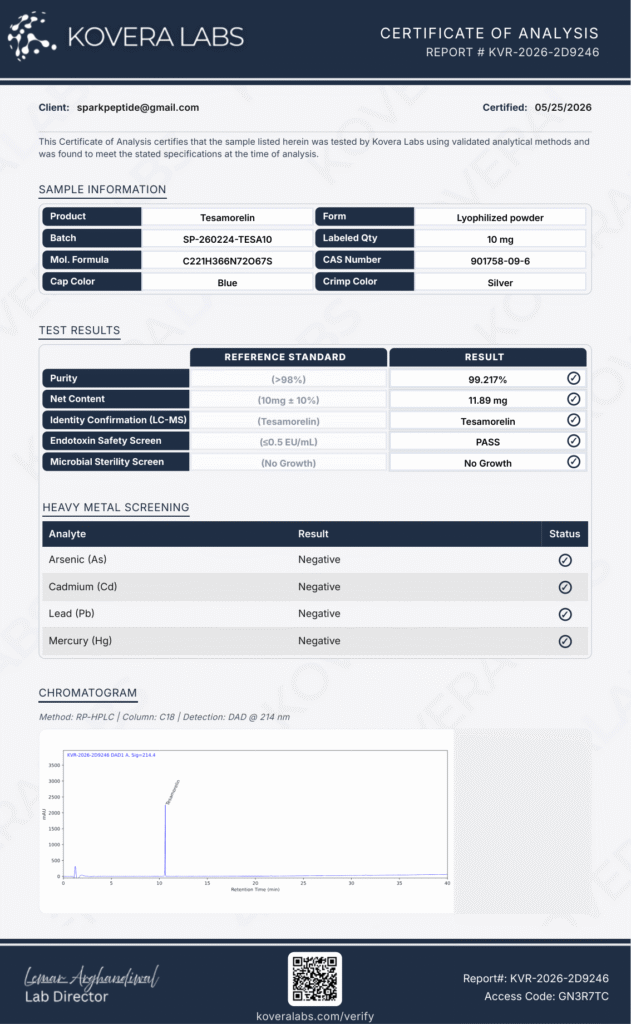
Every Spark Peptide product is tested and verified by third-party labs with batch-specific analytical documentation. For tesamorelin, that means each lot is released with a Certificate of Analysis confirming HPLC-verified purity of 99.9% or greater, mass spectrometry identity confirmation, and passage through Spark Peptide's full 6X Safety Testing protocol covering heavy metals screening, endotoxin testing, bacterial contamination analysis, and solubility and stability assessment so that researchers can source with confidence and build experiments on a verified, traceable foundation.

Certificate of Analysis (COA)

Every batch of tesamorelin supplied by Spark Peptide is accompanied by a Certificate of Analysis that confirms peptide identity, chromatographic purity, and full lot traceability, providing researchers with the analytical documentation needed to validate their source material before experimental use. Each CoA details batch-specific results including lot number, test date, and the release criteria applied by Spark Peptide's independent analytical laboratory. This documentation is an integral component of Spark Peptide's comprehensive 6X Safety Testing and traceability framework, ensuring that every lot shipped meets verified quality standards and can be fully accounted for from manufacture through to the laboratory.

HPLC Analysis Report

High-Performance Liquid Chromatography separates tesamorelin from related peptide species and trace impurities based on retention behavior under defined analytical conditions. In other words, the chromatogram is used to quantify the dominant peptide peak and verify whether the lot meets Spark’s stated purity threshold.

Mass Spectrometry Report

Mass spectrometry confirms molecular identity by measuring the peptide’s mass-to-charge profile and comparing the observed signal with the theoretical expected mass of tesamorelin. For a peptide product page, this is the most direct identity check that the synthesized compound matches the intended sequence and modification pattern.

Additional Safety Screening

Beyond HPLC and mass spectrometry, our 6X testing and verification protocol includes heavy metals screening for contaminants such as lead, mercury, arsenic, and cadmium, endotoxin testing by LAL methodology, bacterial contamination checks, and solubility/stability assessment.  Together these tests support laboratory suitability and chemical safety screening. Full analytical details can be routed through the product batch file or Spark’s Tests & Safety materials.

Legal Disclaimer

For Laboratory Research Use Only. All products sold by Spark Peptide are strictly intended for laboratory research use only. These materials are not for human consumption and are not intended for medical, veterinary, diagnostic, or household use of any kind. Spark Peptide operates solely as a research chemical supplier. We are not a compounding pharmacy and do not operate as a compounding facility as defined under Section 503A of the Federal Food, Drug, and Cosmetic Act. Additionally, Spark Peptide is not registered as an outsourcing facility under Section 503B of the Act. By purchasing from our site, you agree to use our products exclusively for lawful laboratory research purposes. Any misuse is strictly prohibited.

Product FAQ for Researchers

How is the purity of Spark Peptide's tesamorelin verified?

When you buy tesamorelin from Spark Peptide, you can be confident that every batch is verified to 99.9%+ purity by High-Performance Liquid Chromatography (HPLC) and independently confirmed through mass spectrometry identity analysis. Spark Peptide's comprehensive 6X Safety Testing protocol further encompasses heavy metals screening, endotoxin testing, bacterial contamination analysis, and solubility and stability assessment, with COAs for full traceability.

What is the recommended preparation method for tesamorelin in laboratory use?

When preparing tesamorelin for laboratory use, reconstitute the lyophilized powder with sterile bacteriostatic water. Allow the vial to fully equilibrate to room temperature before opening, then introduce the solvent slowly along the interior vial wall to minimize foaming and mechanical stress on the lyophilized peptide cake. Gentle swirling is the preferred dissolution method; vortexing should be strictly avoided to prevent aggregation and structural degradation. For best results, get our bacteriostatic water to ensure compatibility and purity.

How should tesamorelin be stored before and after reconstitution?

Lyophilized tesamorelin should be stored at -20°C (-4°F) in a sealed vial protected from moisture and light exposure. Under these conditions, lyophilized material is generally considered stable for up to 24 months from the date of manufacture. Following reconstitution, the peptide solution should be refrigerated at 2–8°C (36–46°F) and treated as a short-term working preparation.

Is a Certificate of Analysis included with each tesamorelin order?

Yes. Tesamorelin for sale from Spark Peptide is accompanied by a batch-specific Certificate of Analysis confirming HPLC-verified purity, mass spectrometry identity confirmation, and full 6X Safety Testing results for the exact lot supplied. When you buy tesamorelin from Spark Peptide, you can view or download the current batch CoA directly from the product page or request further resting documentation from our support team.

How are Spark Peptide's products packaged and shipped?

Spark Peptide supplies tesamorelin in lyophilized form, which offers significantly greater transit stability than reconstituted material and reduces the risk of temperature-related degradation during fulfillment and delivery. Packaging is designed to be secure and temperature-conscious throughout the shipping process. U.S. priority shipping is available, making Spark Peptide a practical and reliable source for researchers looking to buy tesamorelin with confidence.

What makes tesamorelin structurally distinct from other GHRH research peptides?

Tesamorelin retains the complete 44-amino-acid human GRF sequence but incorporates an N-terminal trans-3-hexenoyl modification on tyrosine, a structural addition specifically engineered to improve resistance to enzymatic degradation while preserving full GHRHR agonist activity comparable to endogenous GRF. For laboratory research, this makes tesamorelin a well-characterized compromise between native-sequence fidelity and enhanced experimental persistence, offering researchers a more stable and analytically consistent ligand for GHRH axis investigations than unmodified endogenous peptide alone.

Property Detail
Name Tesamorelin
Classification Synthetic analogue of human growth hormone-releasing hormone (GHRH); N-terminus modified with trans-3-hexenoic acid group for enhanced stability
Sequence Ac-Tyr-D-Ala-Asp-Ala-Ile-Phe-Thr-Asn-Ser-Tyr-Arg-Lys-Val-Leu-Gly-Gln-Leu-Ser-Ala-Arg-Lys-Leu-Leu-Gln-Asp-Ile-Leu-Ser-Arg-NHâ‚‚
Molecular Weight ~3,859 Da (minor variation may occur depending on synthesis and salt form)
Peptide Length 44 amino acids
Receptor Target GHRH receptor — somatotroph cells of the anterior pituitary
Primary Research Pathways GHRH receptor activation; GH–IGF-1 axis stimulation; lipid metabolism and visceral adipose tissue regulation; hypothalamic–pituitary feedback preservation
Stability Feature N-terminal hexenoyl moiety confers resistance to DPP-IV enzymatic degradation; significantly extended half-life vs. unmodified GHRH
Format Lyophilized powder supplied in sterile glass research vials
Purity ≥99%, verified by lot-specific Certificate of Analysis (COA)
Solubility Soluble in sterile water or appropriate aqueous laboratory-grade buffers
Storage (Lyophilized) –20°C to –10°C (–4°F to 14°F), protected from light and moisture; avoid prolonged exposure to ambient humidity
Storage (Reconstituted) 2–8°C (36–46°F) for short-term use (several days); aliquot into sterile containers and store at –70°C to –80°C (–94°F to –112°F) for long-term storage
Handling Notes Add solvent gently along vial wall; avoid vigorous shaking or agitation; minimize freeze–thaw cycles; handle under aseptic laboratory conditions using appropriate PPE
Batch EP-250522-TE10
Research Designation For research use only — not approved for human or veterinary use, clinical administration, or therapeutic application
Supplier Spark Peptide


Scroll to Top